

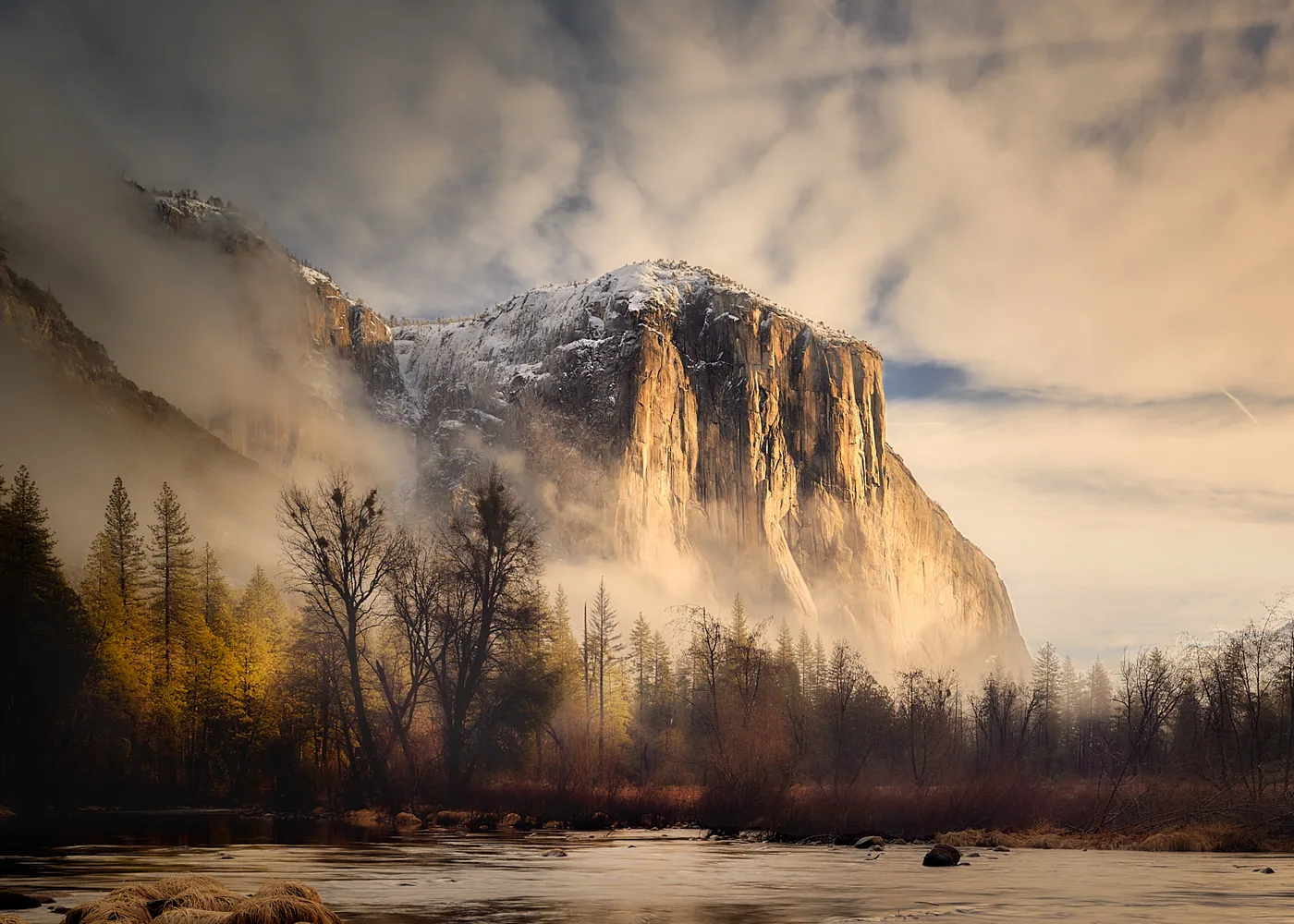
Yosemite Valley is one of the most photographed landscapes in North America, and for good reason. The valley's granite cliffs, cascading waterfalls, and dramatic light create endless opportunities for compelling imagery. Whether you're a collector seeking gallery-quality prints or a photographer looking to improve your craft, understanding how to capture Yosemite's essence takes more than just visiting. It requires intention, observation, and a willingness to return again and again to the same locations across different seasons.
Yosemite photography rewards patience. The light changes constantly, and the valley reveals different moods depending on the time of year, weather, and hour of day. By learning where to go, when to go, and how to see the light, you can create images that rival the work of professional fine art photographers.
Valley View: The Classic Yosemite Photo Location
Valley View is arguably the most iconic vantage point in Yosemite photography. From this perspective, you see El Capitan dominating the left side of the frame, Bridalveil Fall cascading on the right, and Cathedral Rocks just off center. This composition has been photographed countless times, yet it remains powerful when captured with intention.
The best light at Valley View comes during early morning or late afternoon. Dawn offers soft, cool tones and mist rising from the valley floor. If you can arrive before sunrise and wait for the first light to touch the peaks, you'll witness the valley transforming from shadow into illumination. This passage from darkness into light captures something essential about Yosemite's spiritual character.
Visit Valley View across multiple seasons to experience how the same location shifts. Winter brings snow to the higher elevations and clearer skies. Spring swells the waterfalls with snowmelt. Summer floods the valley with green and golden light. Fall brings warm tones and lower water flows. Each season presents a different story to tell through your images.
Understanding Yosemite's Lighting Patterns
Light is the fundamental language of landscape photography. In Yosemite, light behaves in specific, predictable ways that you can learn to anticipate. The valley's steep granite walls create dramatic shadows and direct the sun's path in ways that differ from open terrain.
North-facing exposures, like the walls at Cathedral Rocks and El Capitan's shadowed face, hold cool, even light throughout the day. These areas are ideal for capturing texture and detail without harsh shadows. East-facing granite, including the face of Half Dome visible from certain vantage points, receives intense morning light that emphasizes vertical striations and geological scale.
Waterfalls present their own lighting challenges. Bridalveil Fall and Yosemite Fall are easiest to photograph in soft, overcast light or during the golden hour when backlighting creates luminous mist. Avoid harsh midday sun, which flattens the water into a white blur and washes out the surrounding landscape.
Composition Beyond the Obvious Overlooks
While Valley View and Tunnel View (above) deliver iconic imagery, Yosemite's depth reveals itself to photographers willing to explore beyond the crowded turnouts. The valley floor offers intimate compositions: a quiet section of the Merced River reflecting towering cliffs, a solitary pine tree emerging from mist, a small waterfall threading through granite boulders. Getting your composition in the face of the enormity of some of these settings can be challenging. Three Brothers, upstream from El Cap for example, are easily seen from Southside Drive, and the small parking area directly south of Tahiti Beach. But going down to Tahiti Beach changes everything, and allows you to capture the scale of these giants in the context of the Merced River.
These quieter scenes often feel more redemptive than the grand vistas. They invite the viewer into a threshold moment, a passage from the ordinary into something luminous. A photographer might spend hours composing a single riverside scene, waiting for mist to settle just so, or for light to strike a particular rock face at precisely the right angle.
The park roads themselves create natural leading lines that draw the viewer into the landscape, such as in this image of leaving Phono Bridge on Southside Drive.. The sense of journey and passage through the valley can be as compelling as any still scene.
Yosemite Photo Locations to Revisit
Yosemite rewards repeated visits to the same places. Rather than constantly chasing new locations, consider establishing a rotation of your favorite spots and returning across different seasons and weather conditions. This approach deepens your understanding of how light moves, how water flows, and how the landscape transforms.
Key locations worth returning to include:
- Valley View: the quintessential Yosemite perspective
- Mirror Lake: reflections and close-range granite study
- Lower Yosemite Fall: intimate waterfall compositions
- Cathedral Rocks: textural detail and geological drama
- Tunnel View: sweeping valley panoramas
- Glacier Point: elevated perspective on Half Dome and the valley below
- Tenaya Lake: alpine clarity and reflections
For each location, plan visits at different times of day and in different seasons. Keep notes on light quality, water levels, and weather conditions. Over time, a pattern will emerge, and you'll develop intuition about the best moment to return.
Working With Weather and Seasons
Many photographers wait for perfect weather, but imperfect conditions often create the most compelling imagery. Mist, rain, and storm light add atmosphere and emotional depth to Yosemite scenes. A valley shrouded in fog can feel more intimate and mysterious than a clear day with brilliant blue sky.
Winter presents both challenges and rewards. Snow on granite creates stark, graphic contrasts. Ice formations add texture. The reduced vegetation opens sight lines to distant peaks. However, winter roads may close, and safety requires careful planning.
Spring brings abundant water and life but also crowds and unpredictable weather. The valley floor becomes lush, and wildflowers add color. The balance between the grand geological scale and delicate renewal creates thematic richness.
Autumn often offers the clearest light and least crowded trails. The reduced glare from water and the warm color palette of deciduous trees create a particular kind of beauty. This is often considered the golden period for Yosemite photography.
Seeing Your Images on Your Walls
The power of fine art photography lies not just in the capture, but in living with the image day after day. When you display a carefully composed Yosemite photograph in your home or workspace, you're not hanging a postcard. You're opening a doorway to that moment of revelation, the passage from shadow into light, the sense of scale and beauty that moved you when you stood before the actual landscape.
As you develop your Yosemite photography practice, shoot with the intention of living with your final images. Consider how a composition will feel printed large, displayed in a room where you'll encounter it every morning. This mindset shifts your approach from documenting scenery to creating contemplative art.
Yosemite Valley invites you back, again and again. Each visit, each season, each hour of light reveals something new. The landscape is endlessly generous with those who approach it with patience, intention, and respect. By understanding the valley's light patterns, revisiting key photo locations, and remaining open to unexpected weather and subtle moments, you can create imagery that captures not just how Yosemite looks, but how it feels to stand within it and sense something larger than yourself.