

Wildlife photography is a different (ahem) animal altogether from landscape work. You might spend hours composing the perfect shot of a canyon or forest, but in the field, you have about 0.3 seconds before your subject bolts. There's no second take. The light won't wait, the animal won't pose, and the moment will vanish. That's what makes wildlife photography tips so essential, and why your approach needs to be fundamentally different from how you'd approach a mountain or waterfall.
Hammond Raffetto Art's African wildlife photography captures this intensity. Every frame is a split-second decision made in the field, where preparation and instinct collide. If you're planning a safari or any serious wildlife adventure, understanding the core principles will transform what you bring home.
The Angle Changes Everything
For beginners, one of the most overlooked aspects of wildlife photography is perspective; I know from experience. You instinctively want to shoot from where you're standing or sitting, but that's often the wrong vantage point. The closer you can get to eye-level with your subject, the more intimate and powerful your images become.
When you're photographing a cheetah stalking across the savanna or a bird perched on a branch, drop lower. Shoot from below when you safely can. This simple shift transforms a snapshot into a portrait. It puts the viewer into the animal's world rather than looking down at it from a distance. The eyes become the focal point, and the background falls away.
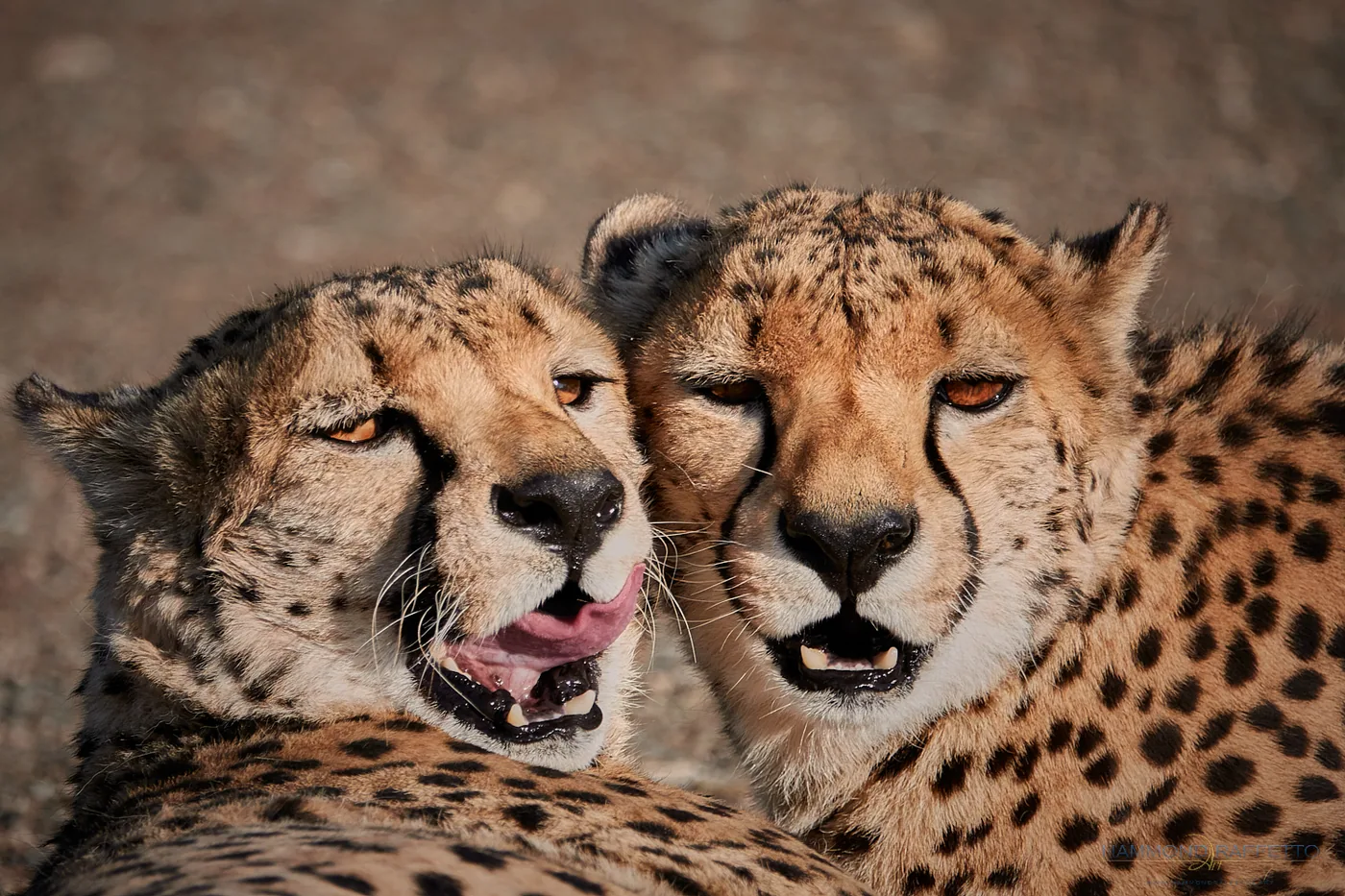
Get to know how animals position themselves and move through their habitat. Scout the area beforehand if possible. Talk to your guides. They've seen patterns that will never occur to you on your first visit. The two cheetah brothers above are an excellent example of getting the right angle. See more of the Hammond Raffetto Art photography that informed these lessons.
Composition Under Pressure
Composition remains crucial in wildlife photography, but the stakes are different. You can't wait for the perfect light to reposition a 300-pound buffalo. What you can do is keep your composition principles sharp in your mind so they become automatic.
Think about leading lines. A river, a ridge, a line of trees can draw the eye toward your subject. Consider the rule of thirds: place your animal's eye or head slightly off-center, not dead in the middle of the frame. Leave space in the direction the animal is moving or looking, giving it room to occupy in the composition.
Framing matters too. Use foreground elements like grass, branches, or rocks to frame your subject. This creates depth and context. The animal becomes part of its world, not isolated against a blank background.
Best Settings for Wildlife Photography
While every situation differs, certain best settings for wildlife photography remain consistent. You need a fast shutter speed to freeze motion, typically at least 1/1000th of a second or faster depending on how quickly your subject is moving. A running animal requires more speed than one at rest.
Keep your ISO as low as possible while maintaining that shutter speed, but don't let ISO fear stop you from getting the shot. A slightly noisy image is better than a blurry miss. Your aperture should prioritize autofocus speed and subject isolation. Many professionals use wide-open apertures to separate their subject from a busy background.
Always prioritize focusing on the eyes. Modern autofocus systems can track eyes, which is a game-changer in wildlife work. Master your camera's eye-tracking mode in daylight before you need it in the field.
Research and Planning Pay Off
Wildlife photography techniques improve dramatically when you do your homework first. Choose your safari company carefully. Look for outfitters with excellent reviews, guides who know the animal behavior, and operators with reasonable cancellation policies. Weather happens. Logistics happen. You want flexibility.
Research the best seasons for the animals you want to photograph. Predator and prey movements follow patterns. Water sources dry up and concentrate animals. Migration happens on schedules. A guide who knows these patterns will position you in the right place at the right time far more often than luck ever could.
If you can travel with someone you know, do it. You'll feel more grounded, less like a stranger in a strange place. You'll also meet other travelers who understand why you're waking at 4 a.m. to sit in a jeep waiting for light. There's real camaraderie in shared adventure.
Equipment and Investment
Yes, you can shoot wildlife on an iPhone and get decent images in good light. But let's be honest: if you've invested five figures in a safari, airfare, and accommodations, your effort deserves capable equipment. It doesn't need to be the latest flagship camera body, but it should have solid autofocus, fast burst shooting, and reliability in the field.
A telephoto lens is essential. You need reach without crowding animals. Longer focal lengths also help compress backgrounds and isolate your subject. Consider backup batteries, memory cards with fast write speeds for burst shooting, and protection from dust and moisture. Your camera will see dirt, humidity, and temperature swings.
Invest in a good bag or protective case. Gear failures in the field are not romantic. They're heartbreaking.
Safety First, Always
Here's the rule that matters most: inside the jeep, you're safe. Outside, you're food. Never leave the vehicle without explicit permission and guidance from your professional guide. Animals that seem docile or distant can move with shocking speed. Respect the space of every creature you photograph.
Your guide is there for a reason. Listen to them. Follow their directions without question. They read animal behavior in milliseconds. Your photos are not worth your life or anyone else's.
Bringing It Home
Wildlife photography is thrilling because the outcome is never guaranteed. You prepare, you plan, you set up your equipment, you position yourself, and then nature decides what happens next. Some days the light is perfect and the animals don't show. Other days everything aligns and you capture something that takes your breath away.
The best settings for wildlife photography, the perfect angle, the sharpest composition: they all matter. But they matter most when combined with patience, respect for the animals you're photographing, and the humility to know that you're a visitor in their world.
When you return home with those images, they deserve to be printed and displayed. The wildlife galleries at Hammond Raffetto Art show what's possible when preparation meets the moment. Your safari experience deserves to live on your walls, reminding you every day of the beauty and power you witnessed in the field.