

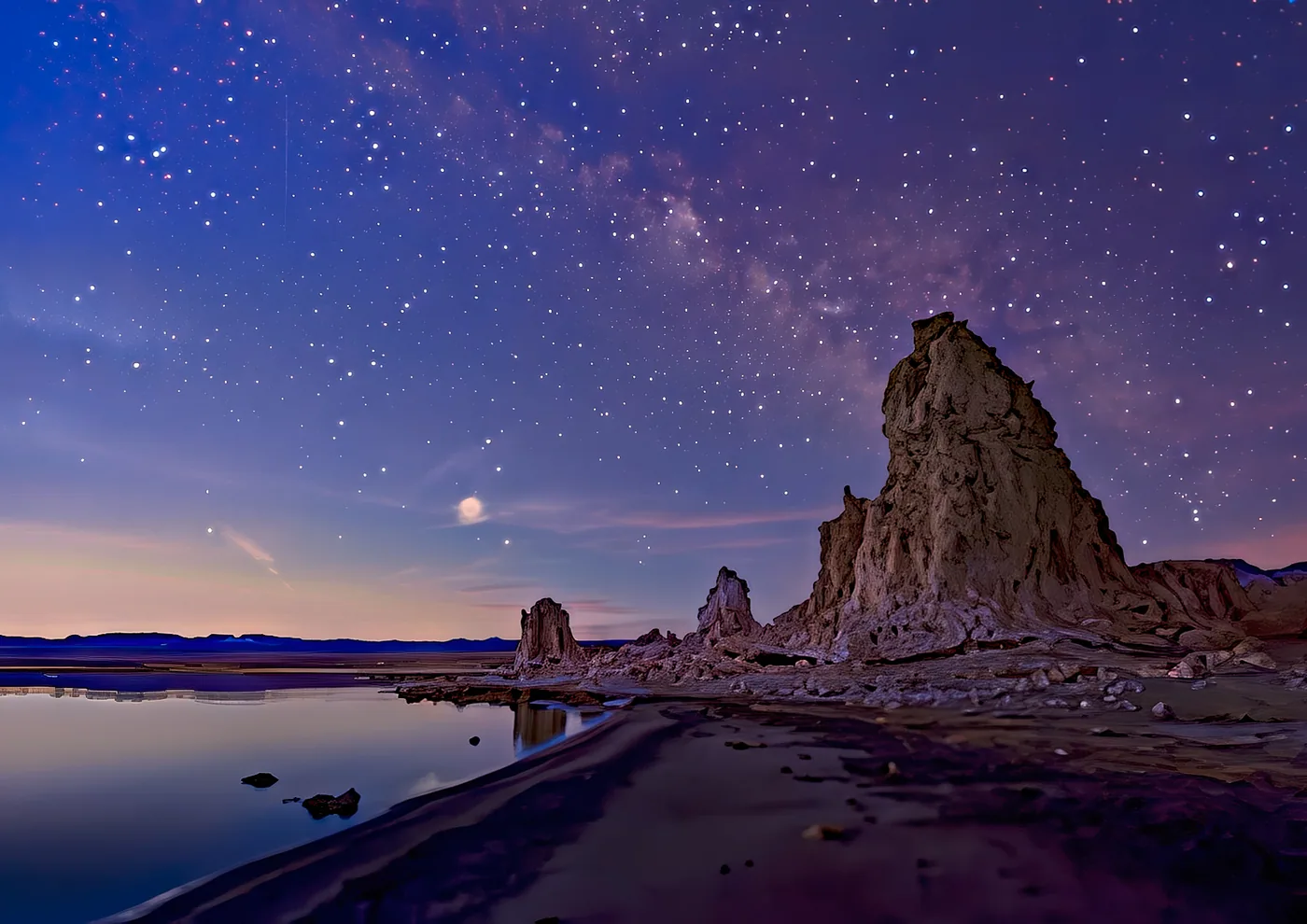
Mary and I were talking just this week about whether there is such a thing as "beginner's luck" when it comes to photographing new places. I think there is, or at least something that could be thought of that way, but only in the context of something Louis Pasteur once said: "chance favours only the prepared mind."
That phrase has stayed with me for years, especially in photography. It suggests that luck is not random. When you encounter a new landscape and somehow capture something compelling on your first visit, it is not really chance. It is the product of all the mental preparation, the visual habits you have cultivated, the research you have done, and the questions you have learned to ask when you arrive somewhere unfamiliar.
This is the essence of travel photography. It is not about exotic locations or expensive gear. It is about bringing a prepared mind to a new place and letting the place reveal itself to you.
Do Your Research Before You Go
The best travel photography begins long before you arrive. Spend time studying the location online. Look at maps, topography, sunrise and sunset angles relative to major landmarks. Read travel blogs and photography forums. Find out what time of year offers the best light, weather, and accessibility.
This research is not meant to box you in. It is meant to set expectations so that reality can surprise you in useful ways. When we planned a trip to photograph along the Eastern Sierra, we spent weeks studying the geography, understanding the relationship between different peaks, and identifying locations that might reward early morning light. That preparation meant we could move quickly once we arrived and take advantage of short windows of ideal conditions.
Research also teaches you the visual history of a place. Knowing what other photographers have captured helps you see beyond the obvious and find your own angle.
But sometimes your homework doesn't have to be so demanding. There are several tools that make simply finding interesting prospects much easier. Location Scout and Shot Hot Spot are two of our favorites.
Scout in Person, Even If It Takes Time
No amount of online research replaces being there. When you arrive at a new location, give yourself permission to wander without your camera in hand. Look at angles, light, foreground elements, and the way the landscape changes as you move through it.
On my first visit to Alabama Hills in the Eastern Sierra, I went in with very few preconceptions. That fresh perspective, what we called "the eye of a stranger," turned out to be an advantage. I was not trying to recreate what I had seen elsewhere. I was discovering what this particular place offered. Walking the landscape, sitting with it, observing how light moved across the rocks and valleys, revealed compositions and moments I would have missed if I had rushed straight to the obvious vantage points.
Scouting is also where you make peace with the fact that not every location will reward you with perfect light. That acceptance is crucial. It frees you to look for smaller moments and subtle beauty alongside the grand vistas.
Embrace the Unfamiliar
There is something powerful about photographing a landscape type you have never encountered before. When you travel to a genuinely unfamiliar place, your eye has no default habits to rely on. You cannot fall back on what worked elsewhere. You have to look carefully and ask what makes this place distinct.
Jumping into New Zealand for the first time, or traveling to Iceland to photograph beyond the typical postcard scenes, meant approaching each location with genuine curiosity. In New Zealand, the Southern Hemisphere light was reversed from what we knew. The scale of the mountains, the density of the forests, the character of the light on water, all of it demanded a fresh visual vocabulary. The rewards of photographing in that unfamiliar territory were immense precisely because we could not rely on habit.
Know When to Abandon Your Plan
This might sound like it contradicts the preparation advice, but it does not. Research and scouting give you a plan. A prepared mind means you are also flexible enough to abandon it.
Weather is often the culprit. You arrive at a location expecting clear dawn light, and instead you get clouds, mist, or rain. Many photographers would see this as failure. Instead, ask what the place looks like in these conditions. Mist can reveal mood and mystery where clear light would show only a familiar view. Storms can produce dramatic skies and light you never anticipated.
Sometimes you scout a location and realize the light is wrong for what you imagined, or the angle you prepared for does not feel right in person. Be willing to change direction. Move to a different spot. Wait for different light. Photograph something entirely different than you planned.
When we prepared extensively to photograph a location in Iceland, we knew the light and weather would be unpredictable. We built patience into our plan. We waited for the right conditions, but we also photographed during the wait. That combination of preparation and flexibility, of knowing what we wanted but remaining open to what we found, produced images we would not have imagined from a distance.
Travel Photography Techniques That Work Everywhere
While every landscape is unique, some approaches translate across locations:
- Arrive early and stay late. The hour after sunrise and the hour before sunset produce light that brings out texture and mood in almost any landscape.
- Look for layering in your composition. Foreground, middle ground, and background give depth and lead the eye through the frame.
- Pay attention to weather and atmospheric conditions. Rain, mist, and clouds are not obstacles. They are opportunities for mood and subtlety.
- Move slowly. Take time to really look at a place from multiple angles and distances before you commit to a composition.
- Photograph the details and the small moments alongside the grand vistas. Some of the most compelling images from any trip are the ones that capture something quiet or unexpected.
Learn to See Like a Photographer
Ultimately, travel photography tips all point toward the same goal: learning to see the way a photographer sees. This means noticing light, understanding how it shapes form, recognizing when a moment feels complete or when something is missing from the frame.
This skill develops over time, but it develops faster when you travel. Each new landscape teaches you something. Each place you visit with genuine attention expands your visual vocabulary. The prepared mind that favours good fortune is really just a mind that has learned to notice, to wait, and to recognize when beauty is presenting itself.
The beauty of travel photography is that you do not need a checklist of exotic locations or rare conditions. You need curiosity, patience, and the willingness to show up prepared and stay flexible. The rest unfolds from there.
When you build these practices into your approach, you discover that travel photography is as much about the process of seeing as it is about the images you capture. The prepared mind does not just favour luck. It transforms the experience of being in a place into something deeper, more intentional, and far more rewarding.