

We've spent years returning to New York City's streets and rooftops, chasing light through the urban canyons and learning how this place reveals itself to patient photographers. Architecture photography in Manhattan is less about collecting iconic shots and more about understanding the relationship between light, geometry, and the specific moment when everything aligns. The city has a rhythm, and if you work with it rather than against it, it will reward you with images that capture not just what these buildings look like, but how they feel.
Understanding Manhattan's Light Geography
The first thing we had to unlearn was thinking of New York as a single lighting condition. The reality is far more complex. The grid of streets creates predictable shadow patterns, but they shift dramatically depending on the season and time of day. A north-south avenue that sits in deep shadow at noon becomes a shaft of direct sunlight at 4 PM in winter. An east-west street that glows with frontal light in the morning becomes a canyon of shadow by afternoon.
When you're scouting locations, pay attention to which direction the facade faces and when direct sun actually reaches street level. The facades of buildings on the east side of an avenue running north-south will catch morning light; the west side will be shadowed until late afternoon. This matters because it determines not just exposure, but the mood and texture of your final image.
The real challenge isn't finding good light, it's managing the extreme contrast ratios that define Manhattan's street-level photography. A sunlit facade adjacent to a deep shadow can span 10 stops or more. You'll need to decide whether you want to preserve detail in the highlights, hold the shadows, or accept that some areas will go pure black or white. There's no single correct answer, but knowing what you're sacrificing is essential.
Grand Central Terminal: Light as Architecture
Grand Central Terminal, where light falls through the clerestory windows in diagonal shafts at midday, remains one of the most photographed interior spaces in the world, yet most photographs miss what makes it extraordinary. The cliche approach is to shoot from the main concourse looking up, but that's just one conversation the building wants to have.
We prefer arriving before dawn or in the early morning, when commuters are fewer and the light is softer. The clerestory windows on the east and west facades admit a different quality of light at different times of day. Morning light enters from the east in warm, nearly horizontal rays that sculpt the marble surfaces. By midday, the light becomes more vertical and harsh. Late afternoon brings long, dramatic shadows across the concourse floor.
The real technical challenge is the contrast between the luminous windows and the darker floor and architectural details below. If you expose for the windows, the concourse becomes a silhouette. If you expose for the floor, the windows blow out. A graduated neutral-density filter can help, but we've found that accepting the loss of detail in one area and composing around it often yields more compelling results. Sometimes the geometry of the shot matters more than perfect exposure across the entire frame.
The Brooklyn Bridge: Geometry and Approach
The Brooklyn Bridge appears straightforward as a subject: distinctive Gothic towers, geometric steel structure, iconic status. But approach matters enormously. Most visitors photograph it from the Manhattan side, looking toward Brooklyn at sunrise. We do that too, but we also spend time on the Brooklyn side looking back toward Manhattan, from the pedestrian walkway at various heights, and from the water level.
The structural geometry of the bridge reads differently depending on your vantage point. From the pedestrian walkway, the cables create powerful leading lines and repetitive geometry that can feel abstract. From the approach on either side, the towers frame the city behind them. From water level, the entire structure feels monumental in a different way. Each viewpoint tells a different story about Victorian engineering and how we relate to scale.
The pedestrian walkway offers perhaps the most intimate perspective, where you can explore the bridge's geometry at eye level and frame views of Manhattan or Brooklyn through the steel grid. We often return multiple times across different seasons and weather conditions. A foggy morning creates an entirely different mood than brilliant sunlight. Rain-slicked surfaces add reflections and texture. By returning, we layer surprise with familiarity and find compositions that feel earned rather than obvious. Visit the the Brooklyn Bridge — Victorian engineering that still reads as futuristic from every angle, and you'll understand why photographers never stop finding new ways to see it.
The Oculus and One World Trade Center
Calatrava's Oculus at the World Trade Center is a study in white steel and controlled geometry. The interior is all symmetry and soaring ribs, which makes composition both easier and harder. Easier because the architecture itself suggests framing. Harder because every photographer frames it the same way.
The defining feature of the interior space is the central oculus opening in the ceiling, which admits a shaft of daylight. Shooting in daylight, your challenge is extreme: the bright opening versus the white structural elements below. You'll lose detail somewhere. Some photographers shoot in monochrome to lean into the graphic quality. Others use long exposures to smooth the tonal transitions. We often return at different times of day to see how the light angle changes the geometry of the shadows cast by the ribs.
After dark, the Oculus transforms. Artificial light sculpts the white surfaces, and you can compose without managing daylight contrast. A tripod and long exposure allow you to capture the moving crowds as subtle streaks or ghosts, emphasizing the stillness of the architecture against the flow of people. This is where patience pays off. A 20 or 30-second exposure requires that you anticipate the composition and commit to the moment.
One World Trade Center nearby presents a different challenge: scale and context. The tower is not traditionally compositionally balanced, and its significance as a memorial site adds an emotional dimension that shouldn't be ignored in your framing. Shooting it requires thoughtfulness about what story you're telling and what you want viewers to feel when they see it.
Manhattan Skyline from the Jersey Side
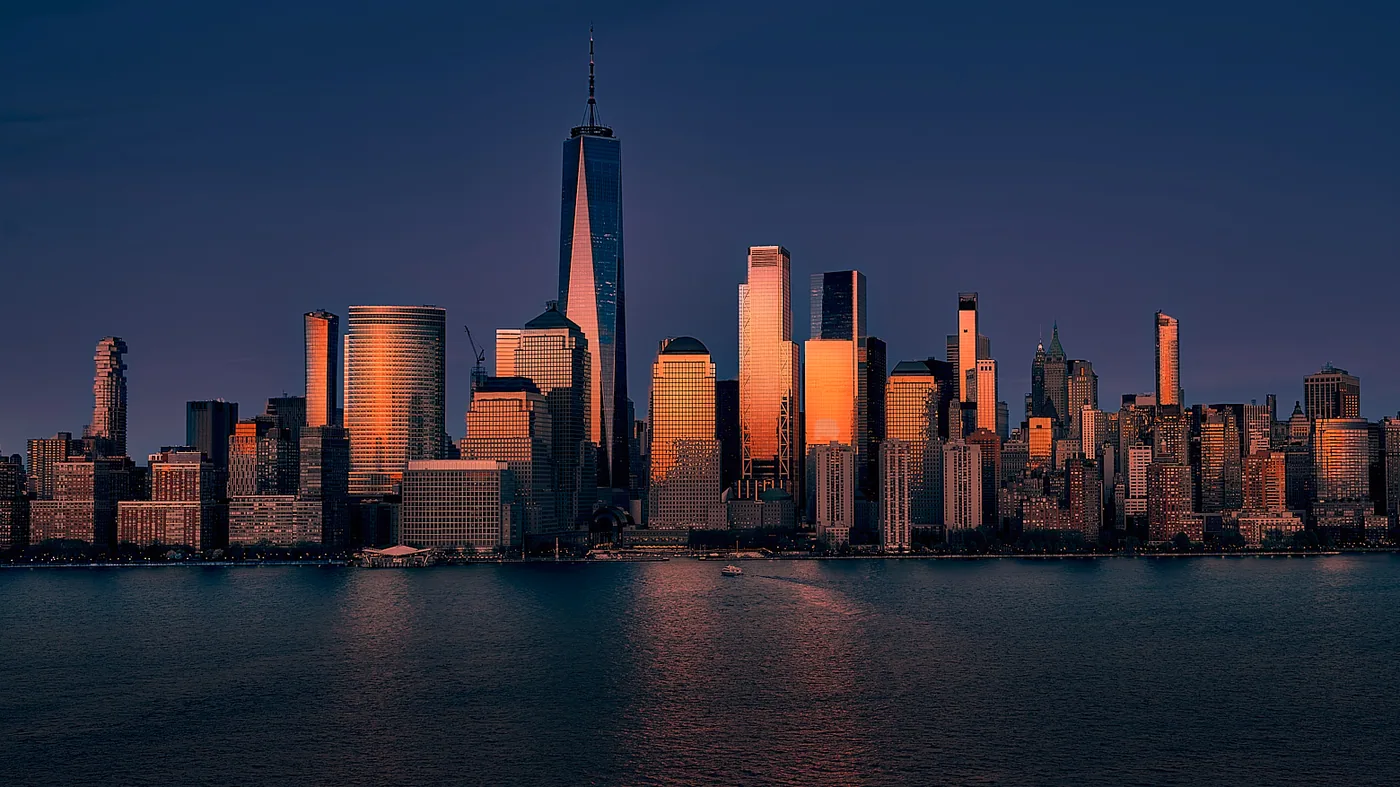
Many fine art photographers overlook the perspective from New Jersey, but the Manhattan skyline at sunset from the Exchange Place prospect in Jersey City (pictured above) offers something the more touristic Hudson River Park viewpoints don't: isolation and clarity. The view is less crowded, the sight lines are clean, and the light sits differently on the facades when you're shooting from across the river.
This vantage point works best in the golden hour and into blue hour. The facades of lower Manhattan buildings catch warm light while the sky still holds color. Shoot too early and the light is flat. Shoot too late and the buildings go dark against a sky that's lost all nuance. There's a narrow window where both elements shine.
Long exposure is your tool here. A 4 to 10-second exposure smooths the water and captures any light trails from the occasional boat. The tripod is non-negotiable. Arrive early to scout your exact position and framing, then settle in. The city's light show changes minute by minute as the sun drops.
Technical Foundation for Success
We work with the understanding that composition and timing matter more than gear, but a few technical considerations will serve you:
- Use a tripod whenever possible. It steadies your framing and allows you to work with longer exposures in low light.
- Shoot in aperture priority or manual mode so you maintain control over depth of field and exposure.
- Polarizing filters help manage reflections off glass and reduce glare from facades.
- A graduated neutral-density filter helps when you're balancing bright skies against darker architecture.
- Plan for specific light. Don't photograph just because you're there. Visit at times when light serves your composition.
- Return to locations across seasons and times of day. Familiarity reveals possibilities that first visits miss.
- The AIA New York Center for Architecture is a valuable resource for architectural walking tours and research.
Patience and Specificity Over Coverage
The mistake we see most often is photographers trying to 'do' New York in a weekend, checking off iconic shots without giving any single location the time it deserves. The city rewards the opposite approach. Return to Grand Central multiple times. Explore the Brooklyn Bridge from five different vantage points. Shoot the skyline at various seasons and times of day.
When you slow down and commit to specific locations, you stop competing with the millions of postcards and tourism photos. You start creating work that feels personal and earned. That's when architecture photography becomes something more than documentation, and when New York's iconic structures begin revealing themselves as genuine subjects for fine art. The city has depth if you're willing to find it.
If you're working toward building a collection of New York imagery or seeking to understand how architectural fine art photography draws viewers into emotional response, explore the portfolio. Hammond Raffetto Art brings a methodical, patient approach to urban and architectural work, informed by years of returning to places and seeing them anew.