

America turns 250 this weekend, and the moment invites a particular kind of reckoning. Not about cities or monuments, but about the wild places that were set aside so future generations would still have them. The national parks system is one of America's most visionary acts: a decision made more than 150 years ago, beginning with Yellowstone in 1872, that wildness is irreplaceable, that scale and silence and light unmediated by development are worth protecting in perpetuity.
We have spent years photographing these places. The scale is still humbling. There are 63 national parks in the system, along with hundreds of other National Park Service units. We have photographed a fraction of them, and we return to the same places again and again, season after season, learning new light and failing often. This post is both a guide and a personal reckoning with what it means to try to make photographs in landscapes so large, so protected, so aware of their own permanence.
Why National Parks Photograph Differently
There is a difference between photographing a landscape and photographing a protected landscape. The second carries weight.
In a national park, the light is cleaner. The air, protected from decades of industrial compromise, carries a different quality. The scale is uninterrupted. You are standing before something that was intentionally preserved, not something that survived despite neglect. That changes what you are trying to make. There is moral weight in the act of bearing witness to a place that was defended, legally and politically, so that you could stand there at all.
The challenge for photographers is not finding beauty in these places. Beauty is abundant. The challenge is earning it. It is finding the moment when the postcard dissolves. It is being patient enough to wait for the light that no one has seen before, even in places where thousands come every day.
Yosemite National Park: The Valley Floor at First Light
Yosemite is where most photographers begin and where many return for a lifetime. The valley floor at first light, before the buses arrive and the crowds settle into the meadows, is one of the most accessible great landscapes in the world. And because it is accessible, it is also one of the most photographed.
The trap is trying to make the postcard. Every iconic angle has been made, has been printed on millions of calendars, has been screensaver on millions of computers. The opportunity lies elsewhere. The Merced River at the quiet end of October, mist rising from the water, the valley walls barely visible. Bridalveil Creek winding quietly to the Merced River, a moment that most visitors drive past without slowing down. Tunnel View before the tour buses, when the light is still cool and the valley below is beginning to gather color. That is where the photography lives.
Arrive before dawn. This is not a metaphor. In Yosemite especially, golden hour is not a romantic notion. It is a deadline. Be on location 45 minutes before sunrise or accept that you are making a tourist photograph rather than a photographic one. The light moves fast. The moment is brief. Everything depends on where you were standing when it arrives.
Redwood National and State Parks: Scale as Subject
The tallest, most massive living things on earth require a different approach. Prairie Creek Redwoods in morning fog. The trail that winds through old-growth stands, where the trees are so massive that the camera cannot contain them. Where a 35-millimeter sensor, vast as it seems, becomes suddenly small.
In the forest interior, past the coastal trail crowds, Trillium Falls in Prairie Creek Redwoods State Park sits hidden in old-growth dark. It is worth the walk. The challenge in photographing redwoods is not finding beauty. It is conveying scale in a two-dimensional frame. How do you show someone standing before a tree that is 2,000 years old and wider than a house? The answer is usually: you find a threshold. A stream between the viewer and the tree. A break in the canopy. A corridor of light. You stage the passage from where the photographer stands into the presence of something that does not recognize human time.
The most useful light in the redwoods is often the diffused light of an overcast morning. The forest interior does not want direct sun. It wants gray skies, mist, and the kind of soft luminosity that has nowhere to cast a shadow.
Death Valley and the Eastern Sierra: Simplification and Light
Death Valley photographs differently still. The Mesquite Flat Dunes at dawn. The salt flats of Badwater, where the horizon is so flat and the light so austere that scale becomes abstract. Death Valley rewards photographers who understand that the desert simplifies. There is less here: less water, less vegetation, less distraction. What remains is essential. The geometry of the playa. The shadow of a dune. The salt crust catching first light.
The summer sun is not your friend. November through March is the serious photographer's season. The light is lower, longer, kinder. The heat does not bend the air into shimmer.
The Eastern Sierra Nevada, while not technically a national park, is managed in partnership with the National Park Service and the national forests that surround it. It is where we return again and again. Mono Lake at first light. The ancient bristlecone pines of the White Mountains, trees that were old when Christ was born, still standing in the high desert. The eastern escarpment of the Sierra Nevada catching the last alpenglow, the light so warm it feels like fever. This landscape teaches patience. There is nothing here that will accelerate itself for your convenience.
The Golden Gate National Recreation Area: A Coastal Revelation
As America turns 250, the Golden Gate National Recreation Area feels like the right place to begin a larger conversation. It is not a national park, technically. It is a National Recreation Area managed by the National Park Service, and it is one of the most visited NPS units in the country. Most visitors never find its best light.
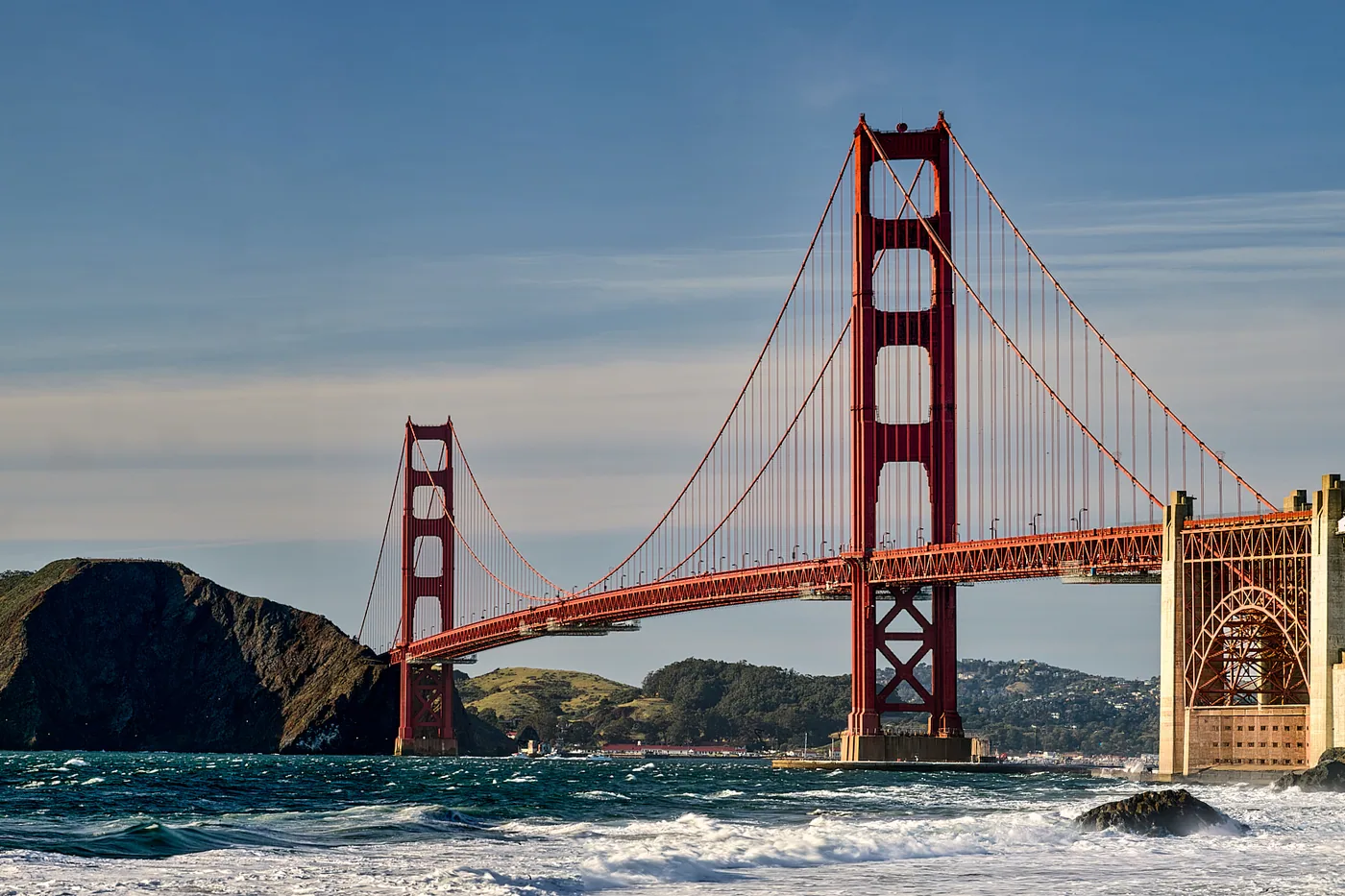
The overlooks are crowded. The headlands are not, the beaches usually roomy enough for contemplative photography. From the Golden Gate National Recreation Area, Marshall's Beach, south and west of the Bridge, offers the imposing southern tower rising abo the Pacific, captured on a gleaming afternoon: a Pacific-front view that most visitors never find, with the Marin Headlands in the background and the tower rising from the rocks at the base. The GGNRA contains some of the finest coastal photography in California.
Practical Guidance from the Field
If you are planning to photograph any of these places, here are the truths we have learned:
- Arrive early. Earlier than you think. The light before dawn is worth the lost sleep.
- Return to the same place across seasons. You will photograph it differently each time. You will understand it better each time.
- In the parks, patience is your most important tool. Wait for the light you recognize. Do not settle for adequate.
- The atmosphere in protected landscapes is noticeably cleaner. You are seeing air that has not been compromised by development. Photograph accordingly.
- In fog and mist, the parks reveal their best geometry. These are not obstacles. They are invitations.
The act of photographing these places is a form of attention. Sustained, deliberate, quiet. You are a witness to something that does not need you there. The parks are older than the country. Still worth every early morning, every late afternoon.
When you bring these landscapes into your home or workspace as fine art, you are choosing to live with the redemption they offer every day. The morning mist. The distant peak. The light on stone. These are the moments that move our everyday cares to the sidelines and remind us of the grandeur in which we live.