

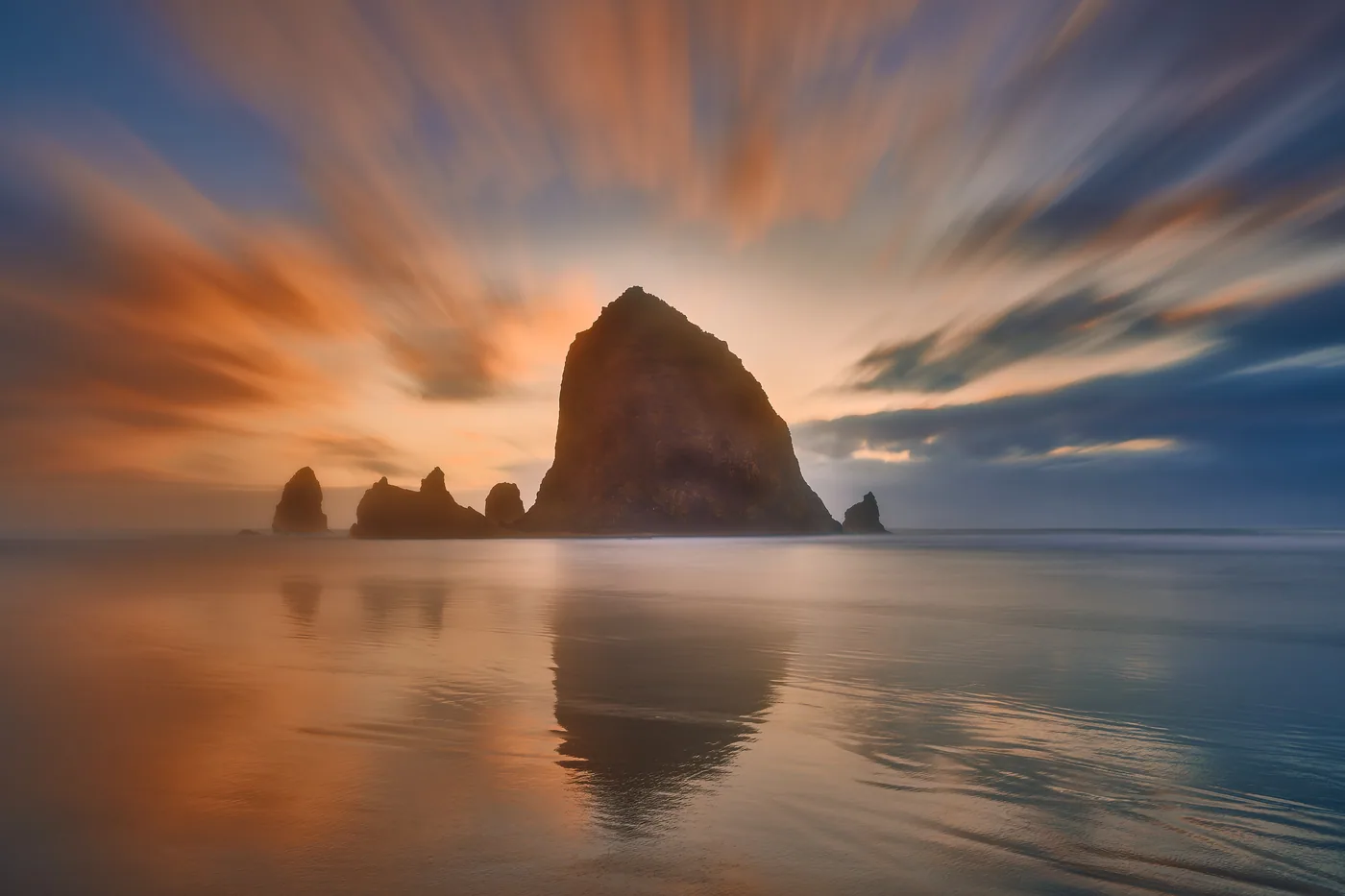
Long exposure landscape photography is a transformative technique that turns ordinary scenes into dreamlike imagery. When water flows and light dances across the sky, slow shutter speeds reveal patterns invisible to the naked eye. Whether you're drawn to the misty power of waterfalls or the movement of clouds above city skylines, learning how to do long exposure photography opens doors to creating art that feels timeless and contemplative.
This is not for everyone or every image though. Some folks like to see the action of water, or the formations of clouds. And the image you envision may call for something that has more or less definition, and that in turn will be influenced by the speed with which water, or clouds (sometimes both), or light trails might be moving. You will be rewarded by approaching your vision with deliberate intention. So, ask yourself: "What is the story here? Is it the power of the water, or its grace and fluidity? Is it the clouds, or the movement they create over time? What is my subject, and how does the re-presentation of fluid movement in my scene frame it, or contrast with it, defer to it or argue with it?"
Understanding Long Exposure Basics
Long exposure photography relies on one principle: keep your shutter open longer than normal to let more light reach the sensor. This extended exposure time causes moving subjects like water, clouds, and light trails to blur smoothly, creating that signature silky or ethereal effect.
The longer your shutter stays open, the more movement gets recorded. A waterfall shot at half a second might show some texture in the flowing water, while a 10-second exposure transforms it into something almost abstract.
Essentials You'll Need
Before heading out, gather these core tools:
- A sturdy tripod (non-negotiable for sharp, blur-free backgrounds)
- Neutral density (ND) filters
- A polarizing filter to control light reflections, especially from wet rocks and foliage
- A camera with manual mode and histogram display capability
- A remote shutter release or self-timer
- Lens cloth and weatherproofing (especially near water)
ND filters come in different strengths. A 3-stop filter darkens the scene slightly, while a 10-stop filter creates heavy darkness, letting you shoot for many seconds even in daylight. For waterfalls and flowing water, a 6-stop or 10-stop ND is typically ideal. Learn to calculate f-stops in your head or on your fingers. Fiddling with an iPhone app or printed instructions will slow you down, and repeated exposure testing when you're string through a dark viewfinder will drive you nuts. Check your histogram repeatedly.
Long Exposure Waterfall Photography
Yosemite's Iconic Cascades
Yosemite Valley offers some of the world's most photogenic waterfalls. Bridalveil Creek is a classic study in how varying exposures reveal the power and structure of rapidly falling water.
Cascade Creek and Vernal Fall present different challenges. Vernal Fall drops steeply and powerfully in spring but much more delicately in late summer and fall; varied exposures and composition are essential to capturing the feeling you want to convey in your moment. Cascade Creek offers more intimate compositions: you can frame mossy rocks and trees alongside the water. What you frame will determine the relationship between water speed and shutter speed.
Ancient Redwood Forests
In the misty groves of places like Armstrong Woods, smaller creeks and forest waterfalls tell quieter stories. Long exposure landscape photography in these settings emphasizes mood over drama, [smoothing out slow-moving water and accentuating the mist](the filtered light and slow creek water of Armstrong Woods"). Forest waterfalls often flow gently over ferns and smooth rocks. Even a sub-2 second exposure can smooth the water into a dreamy flow without completely erasing the geological detail.
Iceland's Powerful Falls
Iceland's waterfalls are dramatically different. Places like Seljalandsfoss drop from steep cliffs with tremendous volume. The challenge here is that long exposure times can make overexposure a serious problem, especially in the bright, extended daylight of summer. But in overcast or winter conditions, the problem of light is more manageable. Avoid lengthy exposures; more than a few seconds, and your image will look like a bedsheet instead of water. Properly timed, Seljalandsfoss creates an almost surreal translucent curtain. Position yourself to capture context: the surrounding landscape, rocks, and scale. The setting can make the image sing.
Maui's Lush Cascades
Makahiku Falls on the Pipiwai Trail in Haleakala National Park rewards long exposure work with tropical drama. The falls are surrounded by bamboo forests and hung with vines. A 1/4 second exposure reveals the waterfall's grace and movement, while maintaining the clarity and character of the wild, tangled forest.
Haleakala experiences fast-changing light. Scout your composition beforehand and plan your shoot around the best light window for your image. Maui's waterfalls often have pools at the base, which can be incorporated into your composition to add foreground interest and reflect light.
Long Exposure Skies: Two Approaches
Cityscapes and Urban Light
Consider how light moves through a city at night. Car headlights and taillights trace lines across the frame. Building lights flicker and shift. Clouds drift overhead. A 20-30 second exposure captures these motions, smoothing traffic into ribbons of light.
Cityscapes over water present additional opportunities for manipulation of time, such as this image of the water beneath the Oakland segment of California's Bay Bridge. Scouting during the dy makes it much easier to be ready for this sort of shot at night.
Works like Batman Meets Ingmar Bergman and Torquere explore how long exposure transforms the John Hancock Building and Chicago skyline into something almost cinematic. Occidens and Freedom Tower photography show how architecture gains presence and weight in long exposures.
Whether seeking the effect of time on clouds in the day or urban lighting at night, take the time to study your subject. Buildings, and the cities they fill, are waiting for you to make the portrait that reveals their beauty.
Landscape Skies and Coastal Motion
Long exposure landscape photography near the coast reveals the motion of waves and the drift of clouds simultaneously. The Oregon coast offers diverse subjects for this work.
Haystack Rock in Cannon Beach is a long exposure sky study: the massive rock stands still while clouds sweep overhead and waves foam at its base. A 10-15 second exposure softens and smooths the incoming waves while dramatizing the sky, emphasizing the rock's timeless presence.
Arcadia Beach, just down the coast, invites a longer look at wave flow and motion. Waves arrive in sets; a 15-20 second exposure captures multiple wave cycles, creating abstract patterns of white water and foam. Look for the balance between the timing of the waves and the speed of cloud movement.
Secret Beach at Samuel H. Boardman State Scenic Corridor combines sea stacks, tide pools, and dramatic cliffs. Long exposures here blend the movement of waves with the stillness of rock, creating compositions that feel both dynamic and eternal.
For coastal long exposure work, shoot near low tide when rocks and pools add foreground interest. Pay attention to the patterns created by receding waves; they are far more interesting. Time your visits for dramatic light: sunrise, sunset, or storms. A polarizing filter under your ND filter can deepen sky color and reduce glare from wet sand and water.
Camera Settings and Exposure Strategy
Start with these fundamentals:
- Set your ISO to the lowest native setting (typically 100 or 200)
- Choose aperture based on your desired depth of field, usually f/8 to f/16 for landscapes
- Attach your ND filter and calculate exposure using a dedicated ND filter calculator app
- Use shutter speeds from 2-4 seconds for subtle motion up to 30+ seconds for dramatic smoothing
- Always use a tripod and remote release
Metering can be tricky with ND filters in place. Meter before attaching the filter, or remove the filter, meter, reattach the filter, and manually set the shutter speed you calculated. Test your first shot and review the histogram to ensure you are not clipping highlights or crushing shadows.
Composition and Meaning
Long exposure is not just a technical exercise. The effect should serve your vision. Ask why you want a particular shutter speed. Is the blur revealing something essential about the subject, or is it obscuring details that matter?
At a waterfall, a slightly longer exposure emphasizes the flow and energy of falling water, which can feel different from a fast exposure. In a cityscape, long exposure can depict the rhythm of human activity—or remove it altogether—and the passage of time, adding narrative depth. At the coast, long exposure suggests patience and timelessness, fitting the immense age of stone and sea.
Next Steps
Start with a single location and a single ND filter strength. Shoot the same scene at 2, 5, 10, and 20 seconds to see how the effect evolves. Notice which exposure time matches your creative intention. As you practice, you will develop intuition for shutter speeds.
The beauty of long exposure photography lies in slowing down. You cannot rush this work; your tripod and exposure time anchor you to one spot. This rhythm mirrors the contemplative mood that long exposure imagery conveys. You will find the answers to the questions you asked.