

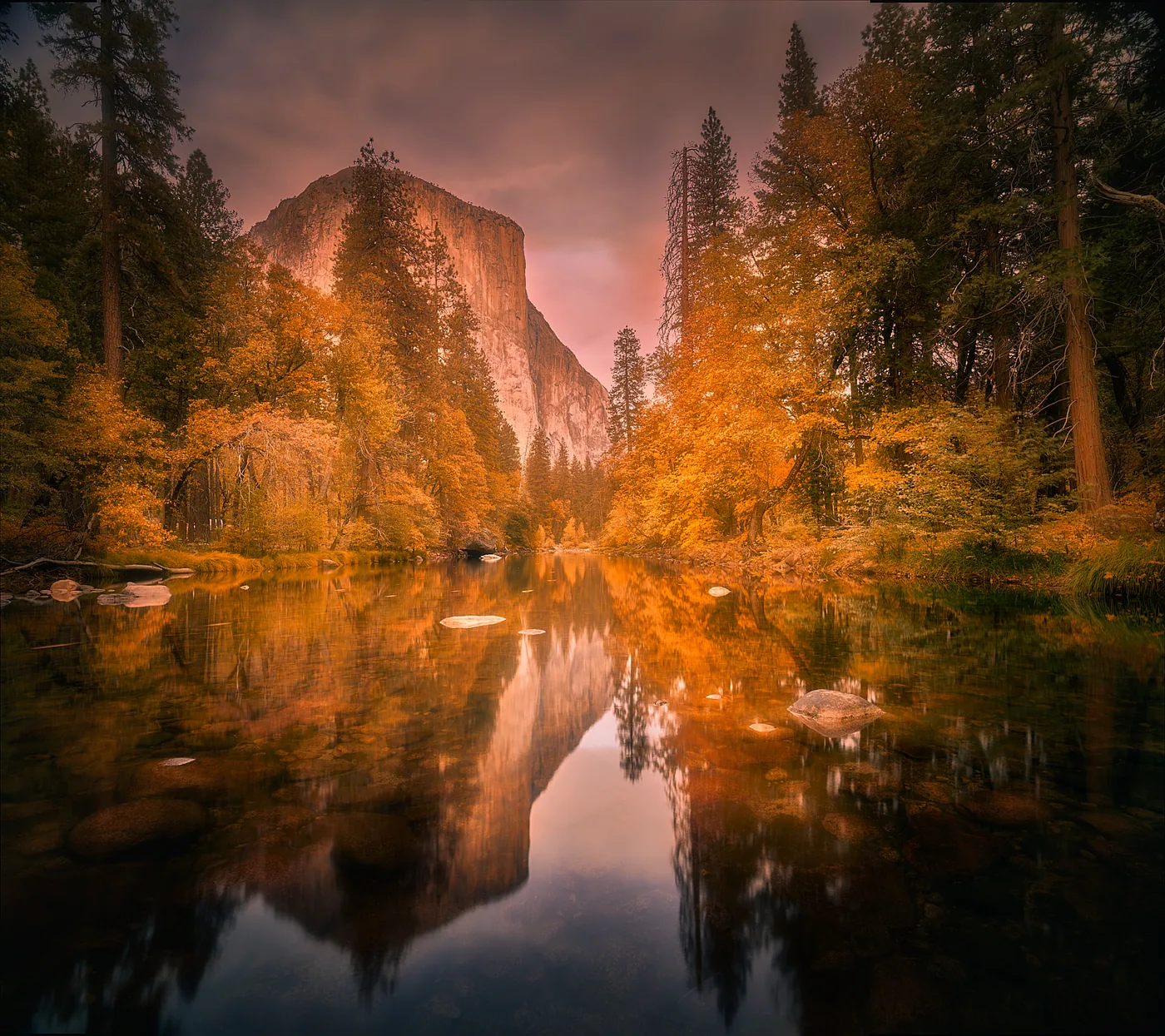
The name is a lie. Not intentionally, but a lie nonetheless. Golden hour, the term suggests a generous span of time, perhaps actually an hour or close to it. What we have learned, standing in the field across countless locations and seasons, is far narrower. The window we actually work with is often fifteen to twenty-five minutes, sometimes less. On certain days, it might be only ten. That urgency shapes everything that follows: the planning, the preparation, the return visits, the way we position ourselves before the light even begins its transformation.
We have stood in the wrong place, camera ready, watching the light we came for paint a distant ridge while we remained in shadow. We have arrived too late, watching the color fade to dull orange as the sun dropped below a ridge we did not account for. These are not romantic failures. They are lessons purchased with time and with the particular frustration of knowing the moment will not come again that day.
What Actually Changes at Golden Hour
Golden hour is not simply warm light. It is three distinct optical properties converging in a narrow window.
First, the angle of the light drops so low that it becomes directional in a way that never happens when the sun is high. Instead of striking a subject from directly above, light at a low angle wraps around edges, reveals texture, separates a subject from its background. A flat boulder becomes sculptural. A forest creek catches light that would be invisible at noon.
Second, the color temperature shifts. The light itself grows warm, moving from the neutral white of midday toward amber, then orange, then deep gold. The air itself becomes part of the palette. Dust, moisture, and particles scatter the shorter blue wavelengths, allowing the longer red and yellow wavelengths to dominate. This warmth is not an illusion. It is a genuine change in the spectral composition of the light reaching your subject.
Third, shadows lengthen. The sun's low angle creates shadows that stretch across the landscape, sometimes extending farther than the object casting them. These shadows are not dark voids. They retain detail, color, and their own texture. They become compositional elements rather than gaps to be filled. An example in our own work is the Wanaka Tree in the last minutes of sunlight over Lake Wanaka — a single subject that would be unremarkable at noon, transformed by directional light into the only thing that matters in the frame.
None of this happens at any other time of day. This is why you cannot replicate golden hour light by simply adjusting color temperature in post-processing. The light itself must be there, hitting the subject at that angle, at that moment.
The Practice of Location Scouting
There is a difference between chasing and knowing. Chasing is what most people do: you hear that the light will be spectacular, you arrive at a famous location at sunset, and you hope. Knowing is something else entirely. It comes only from returning to a place across multiple visits, across seasons, across different weather conditions.
We visit a location before we ever attempt to photograph it at golden hour. We arrive in the middle of the day when the light is harsh and uninspiring. We walk the landscape, noting the topography. We use planning tools like TPE to see, in advance, exactly where the sun will be at a given time on a given date. We identify where the sun will intersect with the horizon relative to our subject. We mark where shadows will fall. We note any obstacles: a ridge that will block the light, a tree that will enter the frame, a building that will reflect stray light.
Then we return. Sometimes we return many times, across days or seasons, watching how the light moves as the sun's position changes with the calendar. Only when we understand a place deeply enough to predict what will happen do we position ourselves for the actual shoot.
The result is that when the light window opens, we are already there. We are not searching for the right angle. We are not scrambling to find higher ground. We are already positioned, already waiting, already watching. And when the moment comes, we are ready.
Managing the Dynamic Range Problem
Golden hour creates a tension that no amount of technical skill can fully resolve, only manage. A foreground that holds detail at golden hour often sits in shadow or dim light. The sky, meanwhile, is already burning with color. Expose for the sky and the foreground goes black. Expose for the foreground and the sky bleaches to white.
We do not solve this problem in post-processing. We solve it in the field, before the shutter opens.
One approach is positioning. We compose the image so that the foreground receives enough reflected light, either from the surrounding landscape or from the sky itself, that the exposure gap narrows. This is where knowing a location matters. You know which way the land slopes, which surfaces will catch reflected light, which compositions will balance the exposure naturally.
Another approach is timing. The exact moment matters. The moment when the sun sits at the horizon is different from the moment ten minutes earlier, when it still has some altitude. Ten minutes earlier, the light is brighter, the contrast is higher, the color less saturated. Ten minutes later, the light is lower, the contrast higher still, and the color deeper. We wait for the specific moment when the light is low enough to be golden, but not so low that the dynamic range becomes impossible.
A third approach is blending. We capture multiple exposures, one optimized for the foreground, one for the sky, and blend them in processing. This is not a cheat. It is an acknowledgment that the human eye, standing in the location, sees the scene with far greater dynamic range than any single capture can hold. We are reproducing what we saw and what we felt.
Sunrise and the Value of Darkness
Golden hour is not only sunset. It begins again each morning, but it arrives differently. At sunrise, you must already be there in the dark. You cannot arrive at sunrise time and find your location. You arrive in darkness, position yourself, and wait for the light to arrive.
This requires more preparation than sunset shooting. You cannot see the landscape to verify that you are in the right place. You must trust the scouting you did in daylight, trust the tools you used to plan the sun's position, trust that when the light comes, you will be in the right spot to receive it.
When the light does come, it often travels in reverse order from sunset. The sky flushes red and orange first, and gradually the warm tones move across the landscape as the sun rises higher. The eastern slope of a mountain range might catch alpenglow, the high peaks glowing warmly while the valleys remain dark. When we scouted [the Alabama Hills before dawn in relation to the Sierra Nevada already catching alpenglow]("the Alabama Hills before dawn in relation to the Sierra Nevada already catching alpenglow behind them" → https://www.hammondraffetto.art/-/galleries/blog/the-road-to-whitney) behind them, we knew in advance where the light would travel and how long we would have before the contrast flattened out.
Sunrise light is often more forgiving than sunset light. The air is typically clearer, humidity is lower, and dust has not yet risen. The dynamic range, while still present, is often less extreme. But the reward is different too. The colors are subtler, the light less saturated. It rewards patience and a willingness to stay after the most obviously dramatic moment has passed.
Blue Hour and the Second Window
Golden hour ends, but the light does not simply switch off. What follows is blue hour, and it is a distinct condition with its own character and its own value.
Blue hour begins when the sun drops below the horizon but its light still illuminates the sky, painting it in deep blue rather than black. The contrast drops. The light becomes more even, more forgiving of composition. Shadows retain far more detail than they do in golden hour. The color temperature cools dramatically, moving from warm to cool in minutes.
Blue hour is often ignored by photographers chasing the warm, dramatic light of golden hour. But it offers something different: a longer window, lower contrast, and an opportunity to compose images that golden hour light might have made impossible. We often shoot through the transition from golden hour into blue hour, capturing the shift in character as the light changes.
The two light phases are not continuous. They are distinct. Understanding that distinction shapes how we plan, how long we stay, and what we attempt to capture.
The Discipline of Return
The photographers who make images that feel truly alive are not the ones chasing light. They are the ones who have returned to a place so many times that the landscape has become familiar. They know what the light typically does there, which means they can recognize when it is doing something unusual. They know the composition well enough to position themselves instinctively. They have failed there before, which teaches you more than success ever can. There are mornings that justify all of it: Mono Lake in the moment lenticular clouds caught the last horizontal light of the day — a convergence of conditions that will not repeat in exactly that form again.
This is why the same locations appear in Hammond Raffetto Art's portfolio across different seasons and different conditions. We return because returning deepens the work. It transforms accident into intention. The first time, the light catches you by surprise. The second time, you were ready. By the fifth or tenth return, you have watched the light behave in ways you did not expect, and you have learned to see it before it arrives.
Golden hour light is not a reward that arrives on schedule. It is a condition that you must earn through preparation, through returning to a place across multiple visits until you know it deeply. It demands urgency in the field and patience in the planning. It requires that you understand not what golden hour is in theory, but what it actually is in the specific place where you stand, on the specific day you have chosen. That is the discipline. And that is the only way we have found to transform a fleeting fifteen minutes into an image that lasts.