

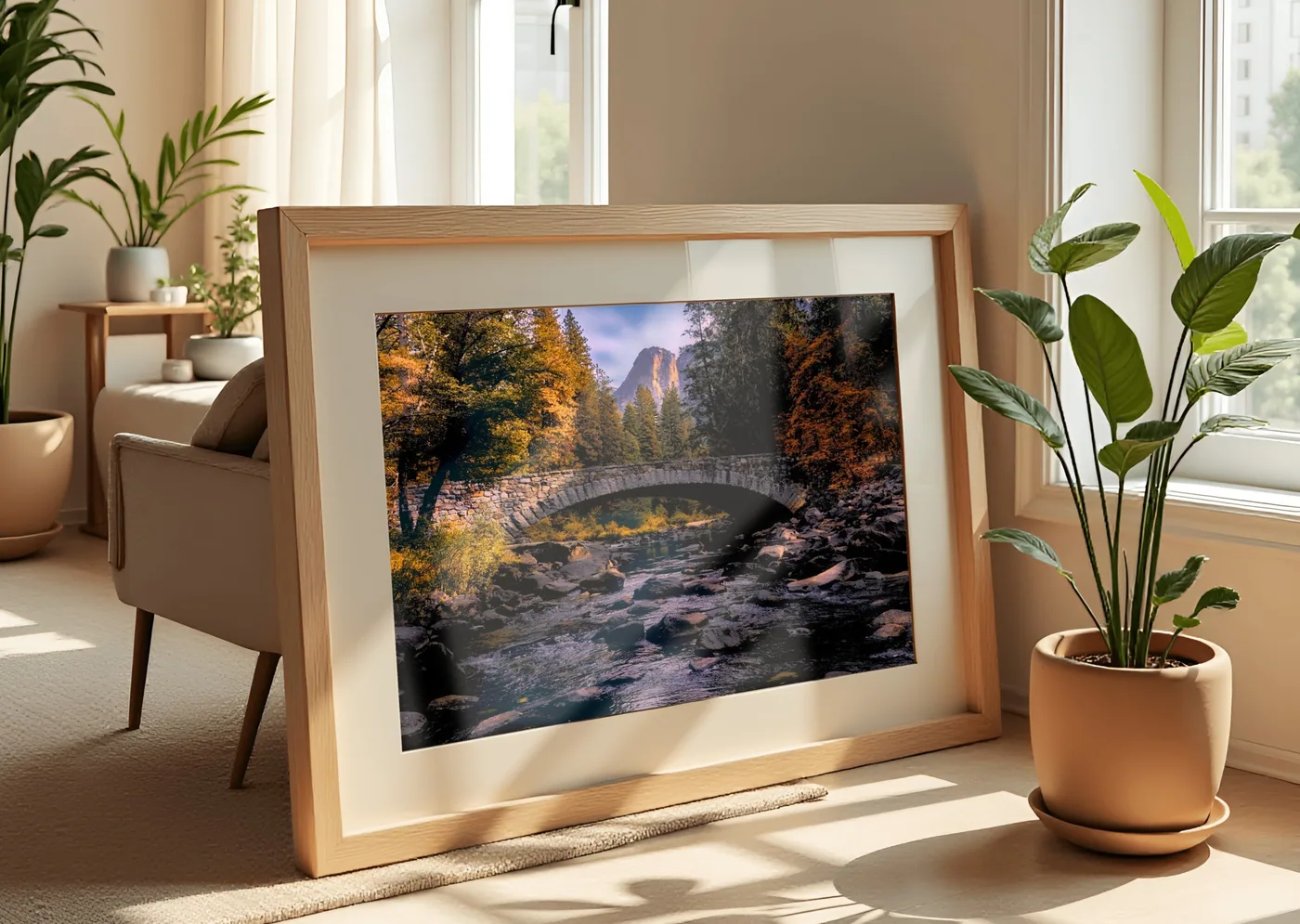
When you invest in a fine art photograph for your home or office, you want it to last. Images with power and detail merit the best printing that suits the needs of your environment and vision. The print quality matters as much as the image itself. Two terms you'll encounter when shopping for art prints are giclee printing and standard photo printing. Understanding the difference between them helps you make an informed choice and ensures your investment holds its beauty for years to come.
What is Giclee Printing?
Giclee (pronounced 'zhee-clay') is a French word meaning 'to spray.' In fine art printing, giclee refers to a high-resolution inkjet printing process that produces museum quality photo prints with exceptional color accuracy and longevity. The process uses specialized archival inks and fine art substrates like canvas, watercolor paper, or premium photo paper.
What sets giclee printing apart is precision. Each print is created individually, with the printer depositing tiny dots of pigment-based ink onto the substrate. This creates prints with:
- Extraordinary color depth and vibrancy
- Superior detail reproduction
- Rich blacks and subtle tonal gradations
- Durability that spans decades when proper archival materials are used
Giclee printing is the standard for fine art studios, museums, and collectors because it preserves the integrity of the original image. When you display a giclee print, you're seeing what the photographer intended.
Standard Photo Prints Explained
Standard photo prints are typically produced using chemical photographic processes or dye-based inkjet methods. These are the prints you might order from a pharmacy or quick online service. They're fast, affordable, and convenient, which is why they're popular for snapshots and everyday photos.
Standard prints often use dye-based inks, which can fade more quickly when exposed to light and humidity. The substrate is usually standard photo paper designed for quick, high-volume production rather than longevity. While these prints look acceptable initially, color shifts and fading become noticeable after a few years, especially if the print hangs in direct sunlight.
Key Differences at a Glance
| Feature | Giclee Prints | Standard Photo Prints |
|---|---|---|
| Ink Type | Archival pigment-based | Dye-based |
| Paper Options | Fine art, canvas, watercolor, specialty | Standard photo paper only |
| Color Longevity | 50-100+ years | 5-15 years |
| Color Accuracy | Museum-grade precision | Consumer-grade |
| Detail & Vibrancy | Exceptional | Good initially, fades |
| Cost | Higher upfront investment | Budget-friendly |
| Production | Individual, made to order | Mass production |
Why Archival Quality Matters
If you're hanging a landscape photograph or travel image in your home, you're making a commitment to living with that beauty every day. Archival photo prints protect your investment and preserve the photographer's vision.
Archival printing uses:
- Pigment-based inks that resist fading for decades
- Acid-free substrates that won't yellow or deteriorate
- Advanced color profiles that stay true to the original capture
This matters especially if you've chosen a print from a photographer who has invested significant time and care into the work. The composition, lighting, and moment captured—like this image of a mother cheetah and son on the Serengeti or this image of Namibia's Quiver Tree Forest at dusk—deserve to be preserved faithfully. When you choose fine art giclee printing, you're honoring that craft.
Making Your Choice
Consider giclee printing if:
- You want the print to remain vibrant and beautiful for 20+ years
- The photograph holds personal or emotional significance
- You're displaying it in a prominent space where it receives regular viewing
- You appreciate the depth of color and detail that fine art substrates provide
- You want museum quality photo prints that resist fading and environmental stress
Standard printing might work for:
- Temporary displays or seasonal rotation
- Budget-conscious orders of multiple copies
- Images you plan to replace or update frequently
The Photographer's Perspective
Photographers who work in landscape, nature, and travel photography understand that their images deserve to be rendered beautifully. The light captured at sunrise over a misty valley or the intricate detail in a forest stream represents a moment of genuine connection with the world. When those images are printed as giclees on proper archival substrates, viewers experience that same sense of presence and beauty every time they look at the print.
High-quality giclee printing is not a luxury add-on. It's an essential part of bringing fine art photography into your space with the integrity it deserves.
Whether you're furnishing a new home, updating your office, or seeking a meaningful art piece, the difference between giclee and standard prints becomes clear the moment you see them side by side. Giclee printing ensures that the dramatic landscapes, vibrant sunsets, and quiet moments of beauty you've fallen in love with will continue to inspire and uplift you for years to come.
A Final Thought
Giclee printing offers a strong archival foundation, but it is worth knowing that it is not the only superior option available when ordering large-format fine art photography prints. At Hammond Raffetto Art, our prints are also available on acrylic — including non-reflective acrylic for rooms where glare management matters — as well as aluminum dibond, which combines exceptional durability with a sleek, contemporary presentation. Each substrate brings its own character to the work: a silk matte canvas has warmth and texture; glossy acrylic has depth and luminosity; dibond has a precision that suits contemporary interiors and architectural spaces. Archival quality is one important factor, but the right choice ultimately comes down to the look and feel you want to live with — how the piece will interact with your specific light, your walls, and your room. That answer is different for every space and every collector, and we are happy to help you think it through.