

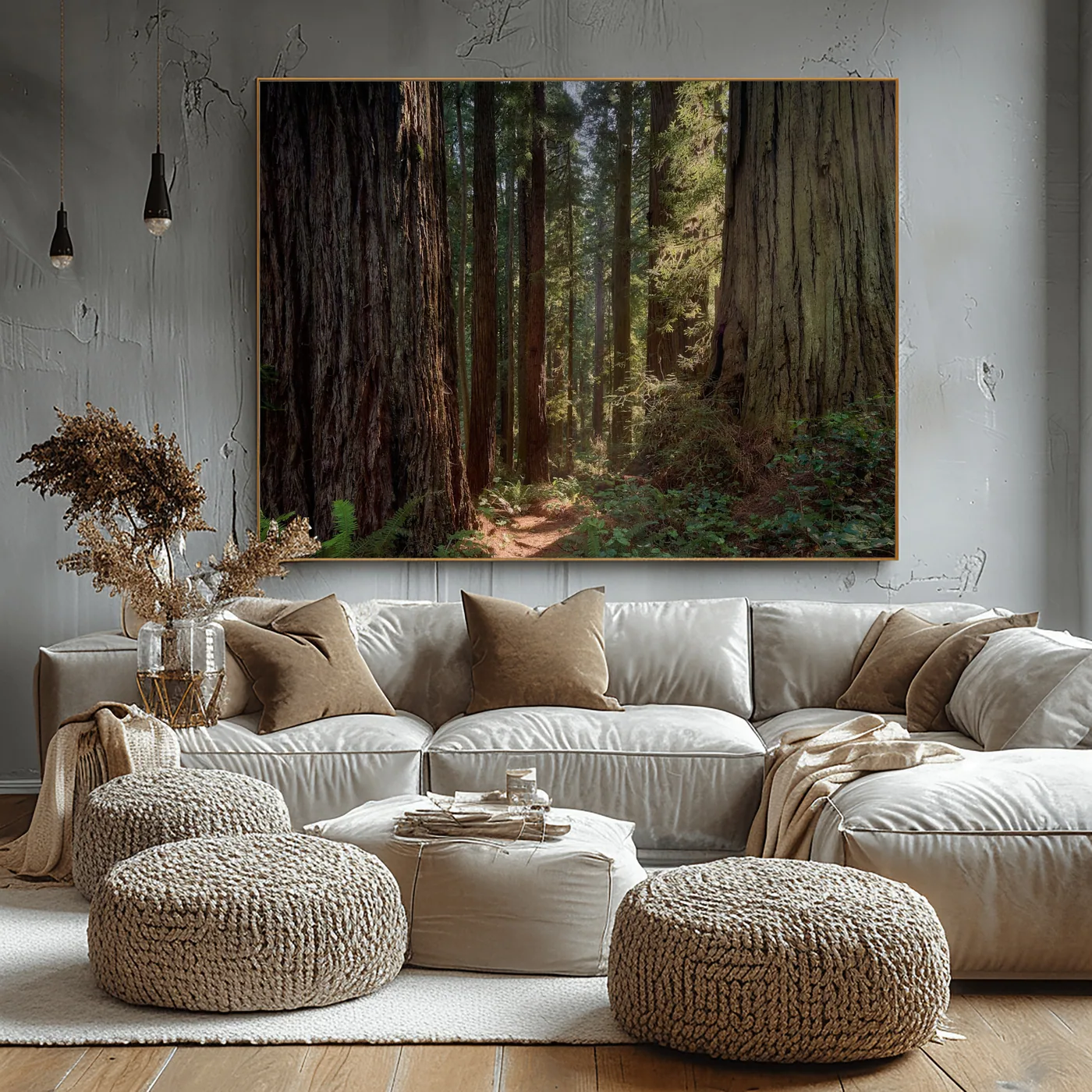
Large photography prints demand thoughtful presentation. Unlike smaller works, oversized art requires deliberate planning around framing materials, wall preparation, and installation technique. Whether you're displaying a bold landscape photograph or a striking travel image, the right approach transforms how the work speaks to everyone who sees it.
Why Large Prints Need Careful Framing
When you hang a large photograph, you're not simply placing an object on a wall. You're creating a focal point that shapes how visitors experience your entire room. A 24-by-36-inch print or larger carries visual weight and presence. Poor framing choices or careless installation can diminish the image's impact or, worse, compromise its longevity. An example of the scale we're describing: large-format landscape photography prints—here, the massive sequoias along the Generals Highway in Sequoia National Park—by Hammond Raffetto Art.
Fine art photography deserves protection. High-quality framing shields your investment from dust, humidity, and UV damage. It also communicates respect for the artist's vision and craftsmanship. The frame you choose becomes part of the composition, so thoughtfulness here pays dividends.
Selecting the Right Frame for Oversized Art
Frame selection depends on the image itself and the space where it will live. A dramatic Icelandic waterfall or redwood forest scene might call for a different frame style than an urban architecture photograph.
Consider these frame characteristics:
- Material: Metal frames offer clean lines and minimal visual competition; wood frames add warmth and tradition. Both work well with landscape and travel photography, depending on your decor.
- Width: Larger prints benefit from proportionally wider frames. A too-thin frame makes a large image feel unstable and unfinished.
- Color: Neutral tones like black, white, natural wood, and muted grays work across most interiors. The frame should enhance the image without drawing attention away from it.
- Glass and glazing: Museum-quality glass reduces reflections and protects against UV rays. For oversized prints, this investment matters more than it does for smaller works.
Take time to see frame samples next to your photograph. Digital previews can be misleading; in-person comparison reveals how the frame interacts with your image's colors and mood.
Mounting Large Prints Correctly
How you mount your photograph inside the frame affects both its appearance and its preservation. Archival mounting methods ensure your print will last for decades without damage.
Key mounting principles:
- Use acid-free, lignin-free materials throughout, including mat board, backing, and adhesives.
- Avoid dry mounting or heat-based adhesives, which can damage fine art prints permanently.
- Consider a floating mount for modern aesthetic appeal, where the photograph appears to float slightly within the frame rather than sitting flush.
- Leave adequate mat space around the image for visual breathing room and to protect the photograph's edges.
- Work with a professional framer if you're uncertain; they have the expertise and materials to mount large prints safely.
Proper mounting protects your investment and ensures your image looks its best for years to come.
Wall Preparation and Installation
How to hang oversized art begins with understanding your wall. Large prints place significant weight on drywall, and installation matters.
Before you drill:
- Locate studs: Use a stud finder to locate wooden supports in your wall. For heavy frames, always mount at least part of the frame on a stud.
- Choose appropriate hardware: Heavy-duty picture hangers, L-brackets, or French cleats distribute weight more effectively than standard picture hooks.
- Measure twice: Mark your hanging points lightly in pencil before you commit to drilling. Step back and view the proposed placement from different angles and distances.
- Hang at eye level: Center the frame's midpoint at approximately 57 to 60 inches from the floor. This standard helps frames feel intentional rather than arbitrary.
If you're uncertain about installation or your wall type is unusual, a professional installer can ensure your print hangs safely and level.
Lighting Your Large Print
Light transforms how viewers experience your photograph. Gallery lighting can seem like an afterthought, but it fundamentally shapes the image's presence in your room. Consider these lighting approaches:
- Picture lights: Mounted above the frame, these directed lights emphasize the photograph and create drama, particularly in dining rooms or entryways.
- Ambient room lighting: Natural or indirect lighting that falls across your print without creating harsh reflections often feels most sophisticated.
- Avoid direct glare: Position your print away from windows or bright artificial light that creates reflection on the glass.
Walk through your space at different times of day. Observe how light changes the mood and visibility of your framed photograph. The best installation accounts for this daily transformation.
Arranging Multiple Prints
While a single large print commands attention, multiple oversized images can create a gallery-like environment. If you're displaying several photographs from a landscape or travel collection:
- Maintain consistent spacing between frames, typically 2 to 3 inches.
- Use matching or complementary frames to create visual cohesion.
- Align frames on a horizontal or vertical grid rather than arranging them in an ad-hoc pattern.
- Consider the overall composition: does the arrangement guide the eye in a satisfying way?
Multiple large prints work particularly well in open floor plans, where they can define different zones without physical barriers.
Protecting Your Print Over Time
Once your photograph is framed and hung, maintenance becomes simple but important. Dust the frame's exterior gently with a soft cloth every few months. Avoid touching the glass directly, which can leave fingerprints and oils. Keep the room's humidity stable, ideally between 30 and 50 percent, to prevent warping or deterioration of the photograph.
UV-protective glass fades over time, so if you live in a very sunny climate, consider replacing it every 5 to 10 years. This small investment keeps your photograph looking fresh.
Bringing Your Vision Home
Framing and hanging large photography prints is an act of care. It honors both the artist's intention and your own desire to live surrounded by beauty. Whether you're displaying a moody waterfall in a bedroom or a sprawling landscape in your living room, thoughtful framing and installation create a space that feels intentional and complete. Take your time with each decision, and your printed image will reward that attention every time you glance at it.