

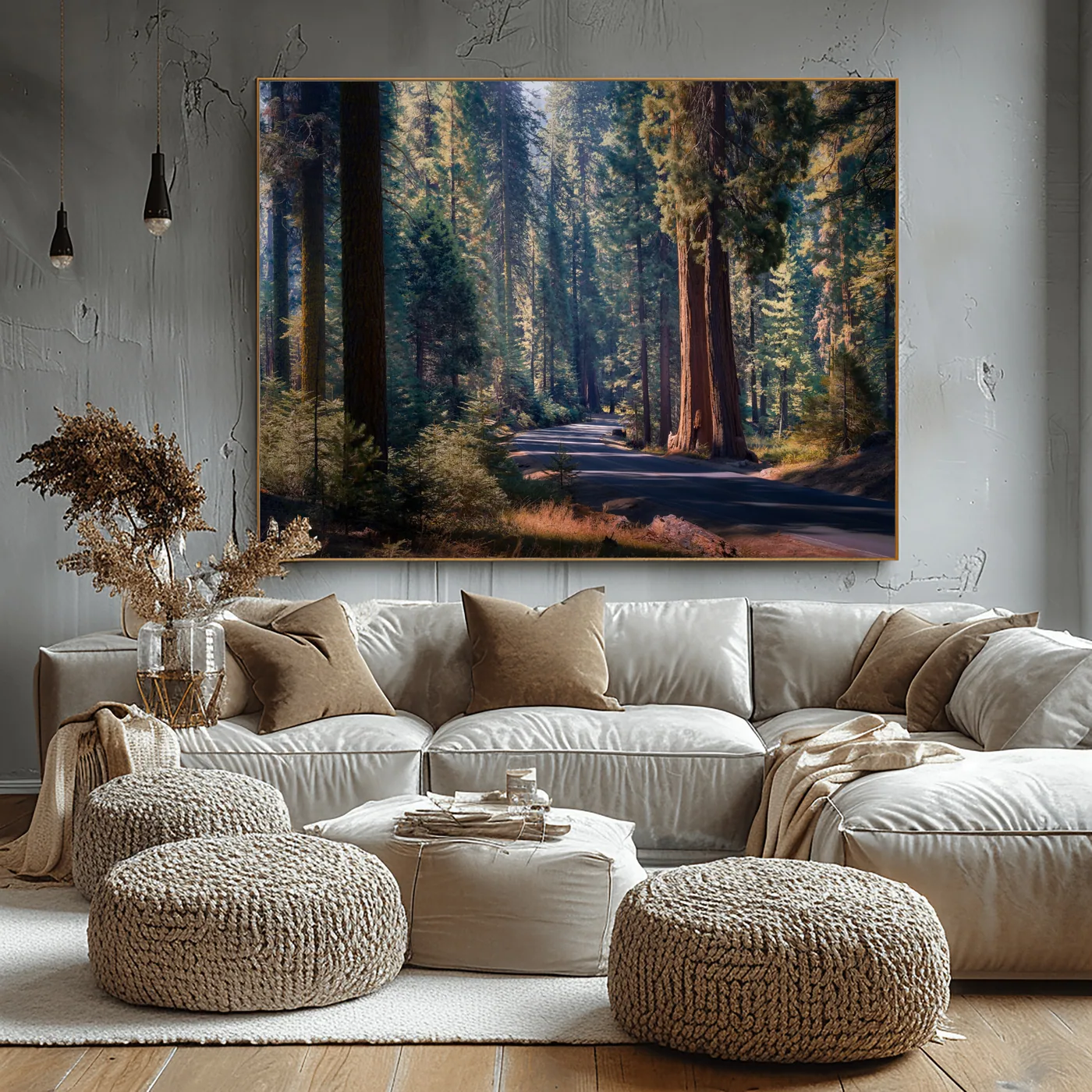
Choosing landscape photography wall art should feel exciting, not overwhelming. Whether you are furnishing a new home, refreshing a tired room, or building a personal art collection, the right print can change how a space feels entirely. A great landscape photograph does not just fill a wall. It transports you somewhere: the cool shade of an ancient redwood forest, the soft gold light lifting over a Yosemite valley at dawn, or the quiet grey of a misty Burgundy canal in the early morning.
This guide walks you through the key decisions so you can choose with confidence.
Start with the Feeling You Want the Room to Convey
Before thinking about size or frame, think about mood. Landscape photography covers an enormous range of emotional registers, and the best piece for your wall is the one that matches how you want people to feel when they walk into the room.
Ask yourself a few questions:
- Do you want the room to feel calm and restorative, or dramatic and energising?
- Is the space used for focused work, relaxed conversation, or private reflection?
- Do you gravitate toward cool tones, warm tones, or black and white?
A majestic sweeping image of El Capitan catching the last light of the day reads very differently from a soft, fog-draped canal scene. Both are equally valid. The question is which emotional note you want to hold in the room.
Scale Matters More Than Most People Expect
One of the most common mistakes when buying fine art landscape prints is choosing a size that is too small for the wall. A print that looks generous on a screen can disappear on a large empty wall.
A few practical rules help here:
- Measure your wall first. Note the width of the wall and the height from floor to the point where you want the top of the print to sit. The art should typically occupy between half and two-thirds of the wall width for a single statement piece.
- Consider furniture below. If a print will hang above a sofa or console table, leave enough breathing room between the bottom of the frame and the furniture surface. Around 15 to 20 centimetres works well in most cases.
- Think panoramic for wide walls. Long, narrow rooms and wide horizontal walls are perfect candidates for panoramic landscape formats. A wide shot of a valley or coastline gives the eye a natural path to follow, which makes the space feel larger.
Fine art photography printed at large format rewards the viewer in a way that smaller sizes simply cannot. The detail in the bark of a giant sequoia, the texture of sunlit rock faces, the shimmer of water on a misty lake: these details only reveal themselves at scale.
Match the Subject to the Space
Not every landscape suits every room. Thinking about the specific subject of a photograph is just as important as thinking about its colours and size.
Living Rooms and Main Entertaining Spaces
These rooms carry a lot of visual traffic and benefit from images with broad appeal and a strong narrative pull. Iconic natural landscapes, dramatic light, and scenes with obvious depth work well here. A dawn panorama over Yosemite Valley or the rushing white water of an Icelandic waterfall gives guests something to engage with and talk about.
Bedrooms and Private Retreats
Calmer, quieter images tend to work better in bedrooms. Soft forest light filtering through tall redwoods, a still lake surface at first light, or the hushed geometry of a canal scene all bring a sense of peace without demanding attention.
Offices and Work Spaces
Landscapes that suggest openness, distance, and space are particularly effective in rooms where you spend long hours. They give the mind somewhere to rest. Images with a clear horizon or wide open sky are good choices.
Colour, Tone, and How They Work with Your Interior
You do not need to match a photograph to your furnishings exactly. In fact, a print that mirrors the room too closely can feel flat. What you want is harmony, not an exact echo.
Consider the following:
- Warm-toned interiors (earthy neutrals, wood, terracotta) often pair beautifully with warm golden-hour landscape photographs or soft amber forest light.
- Cool, minimal interiors (white walls, stone, grey) welcome the blues and greens of water-heavy landscapes, or the stark clarity of a black and white print.
- Black and white photography is perhaps the most flexible option of all. It works in almost any interior and tends to feel timeless rather than trend-dependent.
Browsing a landscape photography gallery is a good way to see a wide range of tonal options and get a feel for what draws you in naturally.
Understanding What 'Fine Art' Actually Means
The term fine art landscape prints gets used loosely, so it is worth understanding what genuine fine art photography involves. At the serious end of the craft, photographers invest not just in high-quality cameras but in deliberate composition, careful management of light, and extensive post-processing work using techniques like HDR blending and 16-bit TIFF workflows. The goal is a final image that holds up at very large print sizes without losing sharpness or depth.
When you buy fine art photography rather than a commercial stock image, you are also buying a story and a specific point of view. The photographer was standing somewhere particular, waiting for specific light, making considered choices about what to include and what to leave out. That intentionality is what separates a fine art print from a decorative poster.
Framing and Presentation
The right frame can elevate a great print significantly. A few guiding thoughts:
- Simple, clean frames in dark wood, black, or natural oak tend to let the image do the talking without competing with it.
- Float mounting (where the print appears to hover slightly inside the frame) gives a contemporary, gallery-like feel.
- Glazing options matter at large scale. Conservation-grade or anti-reflective glass protects the print and reduces glare in rooms with strong natural or artificial light.
If you are unsure about framing, many fine art photographers or specialist printers can advise on presentation options that suit both the specific image and your interior.
Making the Final Decision
The best approach when choosing landscape photography wall art is to take your time. Live with a few shortlisted images for a while, whether that means saving them to your phone's home screen or printing a small test copy. The image that still excites you after a week is usually the right one.
Hammond Raffetto Art brings together a portfolio of landscape, nature, and travel photography spanning ancient redwood forests, Yosemite Valley, Icelandic waterfalls, Burgundy canals, African wildlife, and urban architecture. If you are ready to find something that genuinely moves you, exploring the full portfolio is a good place to start.
NOTE; The piece in the image is viewable here.