

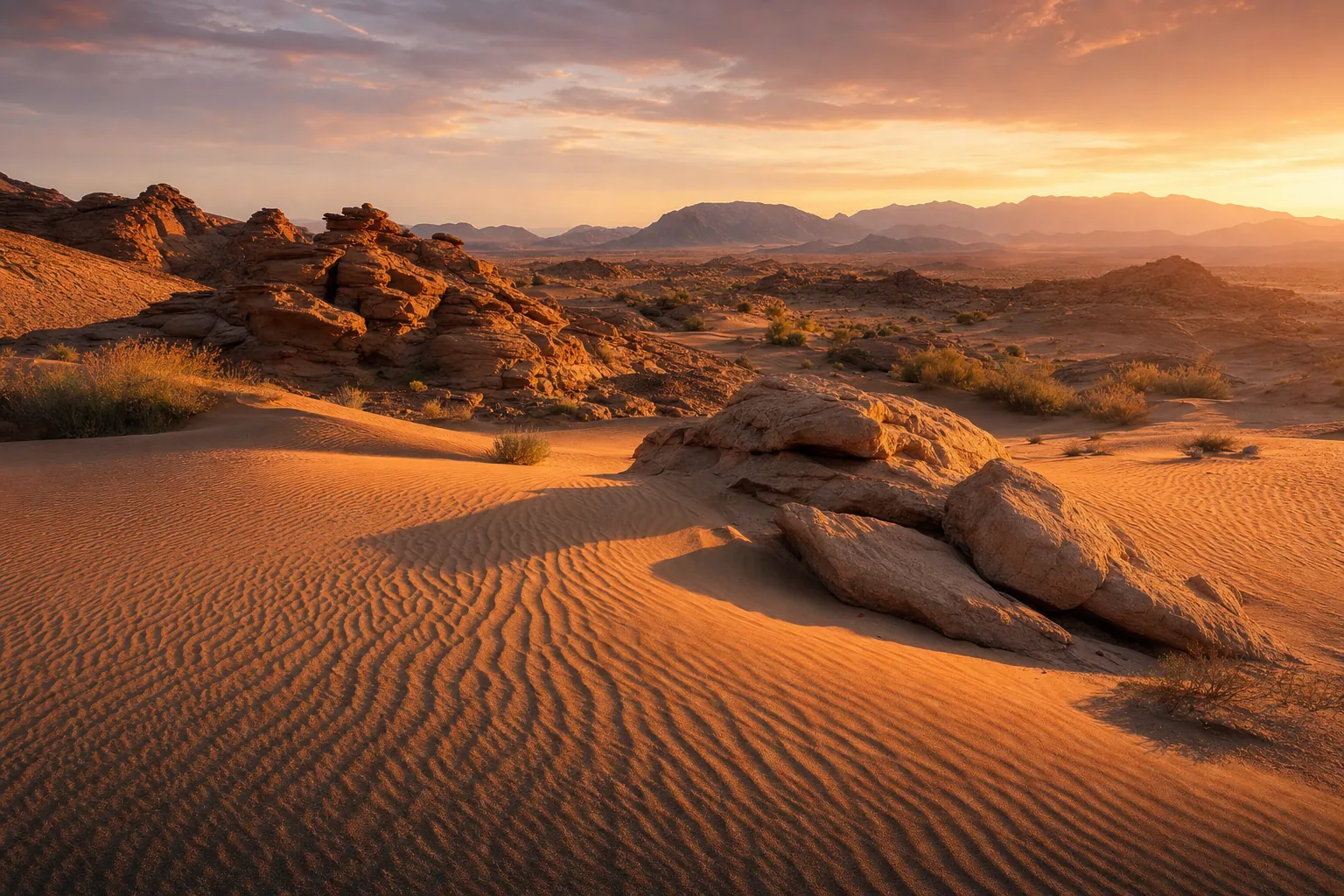
Desert landscapes offer some of the most dramatic and otherworldly scenery on earth. From stark salt flats to towering dunes, the desert presents unique challenges and opportunities for landscape photographers. Whether you're drawn to the Eastern Sierra's high desert plains, Death Valley's sculptural geology, or other arid regions, mastering desert landscape photography requires understanding light, composition, and the particular demands of extreme environments.
Understanding Desert Light
Light behaves differently in the desert. The thin atmosphere and minimal cloud cover mean light is intense, direct, and unforgiving during midday. Rather than fight this, embrace the extreme conditions that make desert scenes so visually arresting.
Golden hour is your most reliable ally. The warm, angled light of sunrise and sunset reveals texture, depth, and color in ways that midday sun cannot. This light transforms ordinary rock formations into sculptural masterpieces and creates the long shadows that define great desert imagery. Plan your shoots around these windows, arriving early and staying late.
Midday light presents its own opportunity. The harsh, overhead sun can create abstract compositions through extreme contrast and deep shadows. The bleached quality of midday in truly arid regions can feel almost otherworldly. If you choose to shoot during peak sun, look for areas with strong geometric features that benefit from dramatic contrast.
Ultraviolet light is stronger in the desert due to altitude and thin atmosphere. This can cause colors to shift in your camera's sensor, making whites appear slightly blue or purple. Adjust your white balance to compensate, or embrace the color shift as part of your unique palette.
Composition in Endless Space
Deserts offer vast, minimalist landscapes where traditional composition rules take on new meaning. With few natural objects to anchor your frame, every element carries weight.
Look for leading lines: a road cutting through sand, a riverbed, a line of rocks, or shadows cast across dunes. These guide the viewer's eye and create narrative in wide-open space. Horizons matter more in desert photography than in forested or mountainous terrain. Place the horizon deliberately, whether low in the frame to emphasize sky or high to showcase foreground texture.
Scale becomes a powerful compositional tool. Include a human figure, vehicle, or structure to convey the vast emptiness around it. This contrast between human smallness and landscape grandeur evokes the sense of awe that desert environments inspire. Look at how Lone Pine Creek uses subtle depth cues, or explore the minimalist approach in Mono Lake in the Nick of Time to see how sparse elements create powerful visual impact.
Framing foreground, middle ground, and background helps viewers navigate empty space. Even subtle differences in tone, texture, or color between these zones create visual separation and depth.
Managing Exposure in Bright Conditions
Desert brightness can fool your camera's meter. Sand and salt flats reflect enormous amounts of light, causing the camera to underexpose if you rely on automatic metering.
Use exposure compensation to dial in the brightness you want. Start by overexposing by one to two stops from what your meter suggests, then review and refine. Blown highlights in salt flats or bright sand can work as compositional elements, but preserve detail in sky and darker rock formations.
Bracketing is your safety net. Capture multiple exposures at different stops, giving you flexibility in post-processing. This approach also supports blended exposures if you want to bring out both bright skies and dark shadows in a single image.
Polarizing filters reduce glare from reflective surfaces and deepen blue skies, which often appear washed out under desert sun. They also reduce the atmospheric haze that can flatten distant mountains.
Color and Contrast in Arid Landscapes
Deserts are not monochromatic. While earth tones dominate, careful observation reveals surprising color. Red and orange rocks glow at sunrise. Salt deposits shine white or pink. Shadow areas contain deep purples and blues.
Saturate the colors you find rather than overprocessing. A sunrise-lit mesa glows most powerfully when its true colors are revealed, not artificially boosted. The restraint often produces stronger images than heavy-handed color grading.
Contrast between warm and cool tones strengthens desert imagery. Warm shadows cast by rocks onto sand, lit by cool sky light, create visual interest. A foreground of warm earth against a cool blue sky naturally directs attention and creates depth.
Technical Considerations for Desert Environments
Deserts are harsh on equipment. Sand and dust damage sensors and optics. Extreme temperature swings stress batteries and materials. Plan accordingly.
Protect your gear with lens caps and lens hoods. Change lenses quickly and keep your camera body capped when you are not actively shooting. Bring more batteries than you think you will need; desert cold drains them faster, while heat can cause them to fail unpredictably. Carry spare memory cards and store them separately.
Stay hydrated and monitor your own condition. Dehydration impairs judgment and slows your ability to capture light when it appears. Bring more water than your hike length suggests you will need.
When to Return to the Same Location
Great desert photographs often come from returning to a place across days, seasons, or years. The same rock formation changes character with light, weather, and time of day. The geometry of a slot canyon transforms as the sun's angle shifts through the season.
If a location calls to you, plan to spend multiple mornings or evenings there. The compositions that seemed impossible on day one often emerge on day three. This patience mirrors the approach Hammond Raffetto Art takes in crafting each piece, returning to scenes and layering surprise with familiarity to deepen the final image.
Emotional Truth in Desert Photography
Desert landscapes evoke solitude, vastness, and timelessness. These feelings come from the land itself, not from effects or filters. Seek compositions that convey the emotional response you felt when you arrived at that place. Preserve the moment's integrity by letting the landscape speak.
Desert imagery can feel morally charged, revealing worlds that few people witness directly. Your role as a photographer is to communicate that revelation faithfully. Technical skill matters, but the story the light tells in that specific place at that specific moment matters more.
Desert landscape photography rewards patience, respect for extreme conditions, and a willingness to return when conditions align with vision. Begin with light, build your composition around it, and let the landscape guide your frame.