

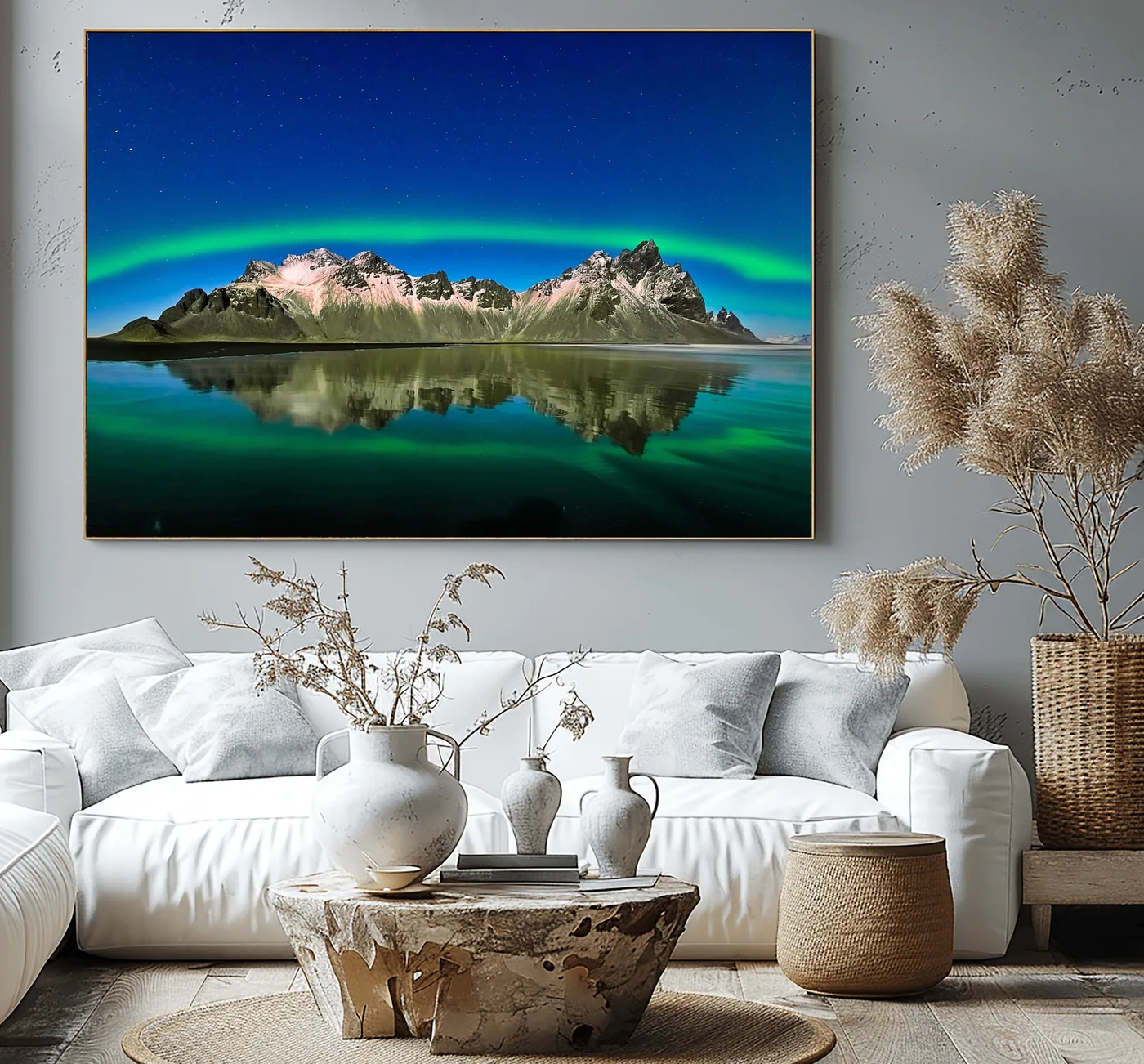
Understanding Fine Art Photography Prints
When you're ready to invest in fine art photography prints, you're making a choice about how you want to live with beauty every day. Unlike mass-produced posters or casual snapshots, fine art photography prints are carefully composed and produced to gallery standards, meant to anchor a room and reward long looking. These are images that deepen with time, revealing new layers of detail and emotion as you live with them.
Fine art photography is distinct because it combines technical mastery with intentional composition. Each photograph represents thoughtful choices about light, timing, and framing. When you bring a fine art print into your home or workspace, you're inviting those choices, and the moments they capture, to become part of your daily environment.
What to Look for in Quality Prints
Quality matters profoundly when buying photography prints. Here's what separates museum-quality work from standard prints:
- Color accuracy and depth: Fine art prints should render colors with precision and allow blacks and shadows to show detail rather than flatten into solid areas
- Paper stock: Professional photographers use archival papers that resist fading and yellowing over decades
- Resolution and sharpness: Images should maintain clarity and detail across their entire surface, whether you're standing back or looking close
- Ink saturation: The ink should sit richly on the paper, creating dimensional, luminous images rather than washed-out or flat appearances
- Proper proofing: Reputable artists proof their prints carefully to ensure consistency across editions
When you examine a print in person or through high-quality digital samples, you should sense that care and intentionality. The image should feel alive, not merely printed.
Choosing the Right Size and Scale
Size dramatically affects how an image works in your space. This isn't about bigger always being better. It's about matching the print to the room and the moment it captures.
A large landscape print, say 40 by 60 inches or bigger, functions as a portal. It draws you in and demands attention. These scales work beautifully in living rooms, offices, or entryways where you have wall space and want a strong focal point. Consider images with dramatic light or sweeping vistas, like a mountain sunrise or a vast desert scene.
Medium-sized prints, perhaps 16 by 24 or 20 by 30 inches, work well in hallways, bedrooms, and smaller spaces. They invite contemplation without overwhelming. Intimate scenes, forest details, or urban moments often shine at these scales.
Small prints, 8 by 10 or 11 by 14 inches, function more like windows. They're ideal for creating a gallery wall, for reading rooms, or for personal offices. You can live with several small prints grouped together, building a narrative across your wall.
Think about where your eye naturally travels in a room. That's often where a print should live, and its size should be proportional to that wall and the adjacent furniture.
The Role of Framing and Presentation
Framing is not decoration. It's part of the art. The right frame protects the print and completes its presentation, while a wrong frame can undermine months or years of photographic work.
At Hammond Raffetto Art, prints can be ordered from our print partner WhiteWall framed or unframed, allowing collectors to choose framing that suits their space and aesthetic. This approach respects both the art and your own vision for your environment.
Consider these framing principles:
- Matting: A mat creates breathing room between the image and glass, protecting the print and creating visual hierarchy
- Frame material: Wood frames tend toward warmth and tradition; metal frames feel contemporary and clean
- Glass: UV-protective glass prevents fading without altering color or clarity
- Proportion: The frame and mat should be proportional to the print itself, not overpowering it
If you're unsure, simple frames in white, black, or natural wood rarely disappoint. The print itself should be the center of attention.
Considering Subject Matter and Emotion
The most important question isn't about technical specs or size. It's about how an image makes you feel and whether you want to feel that way every time you walk into the room.
Imagine living with an image of a misty forest dawn, or a dramatic mountainscape that catches morning light, or a serene water landscape at twilight. What draws you? Landscape and nature photography can evoke peace, awe, contemplation, or quiet joy. Travel photography and architectural imagery might inspire wanderlust or wonder about human creativity and scale.
Walk through galleries, both online and in person. Spend time with images. Notice which ones stop you, which ones make you want to return. That intuitive response is your guide. When you find an image that resonates, it's often because it speaks to something you already value: beauty, mystery, light, stillness, or presence.
For collectors drawn to dramatic landscapes, ancient redwood forests, or images from places like Yosemite Valley and Iceland, portfolios of fine art landscape photography offer deep wells to draw from. You might explore images that capture the play of light in natural settings, where patience and composition reveal scenes that feel timeless.
Building Your Collection Over Time
Few collectors acquire their entire collection at once. Thoughtful collectors build gradually, learning what resonates and how different pieces work together in their space.
Start with one image you love deeply. Live with it for a while. Notice how it changes with different light throughout the day, how it makes you feel at different times, whether it anchors the room or feels out of place. Then consider what might complement it: another piece in a similar tonal range, or something with contrasting mood or color that creates dialogue between works.
This approach also allows you to invest thoughtfully, acquiring prints of genuine significance rather than filling walls out of obligation. A home with five carefully chosen, deeply loved prints speaks more than a room crowded with mediocre art.
Where to Buy and What to Ask
When you've identified images you want to collect, buy directly from the photographer or artist whenever possible. This ensures authenticity, supports the artist, and often gives you access to the full range of sizes and framing options.
Before purchasing, ask questions:
- What paper stock is used, and why did the photographer choose it?
- Are there multiple editions, or is this a limited series?
- What's the archival lifespan of the print and inks?
- Can the artist provide guidance on framing based on their own preferences?
- Is there documentation of authenticity with the print?
Responsive, knowledgeable artists will welcome these questions. Their answers reveal the care they've invested in their work and will help you understand what you're acquiring.
Investing in Your Space and Life
Buying fine art photography prints is an act of intention. You're saying that beauty matters in your daily life, that you want to be surrounded by images that move you, and that you're willing to invest in quality that lasts. When you choose a print thoughtfully and display it well, you're not just decorating a wall. You're creating a doorway to the moments and places that photography captures, allowing you to return to them again and again, every single day.